

إذا كنت أراجع موردي العمليات الحيوية للحوم المزروعة، فلا ينبغي أن أقيم الأنظمة ذات الاستخدام الواحد والأنظمة الفولاذية بنفس الطريقة. يعتمد أحدهما على أفلام الأكياس، وبيانات E &L، وتوريد المستهلكات. بينما يعتمد الآخر على تتبع المواد، والتصميم الصحي، ودعم CIP/SIP، وتغطية قطع الغيار.
بالنسبة لمهندسي العمليات الحيوية، وعلماء زراعة الخلايا، وفرق البحث والتطوير في اللحوم المزروعة، فإن فحص المورد عادة ما يتلخص في أربعة أشياء:
- التوافق الفني عند حجم العمل
- سجلات الجودة والتحكم في التغيير
- تأثير الموقع مثل المرافق، والتنظيف، والأتمتة
- الدعم طويل الأجل للمستهلكات، والخدمة، وقطع الغيار
النقطة الأساسية في المقالة بسيطة: غالبًا ما يناسب الاستخدام الواحد أعمال زراعة البذور والبحث والتطوير، بينما يصبح الفولاذ الخيار القياسي في مرحلة التجريب والإنتاج. لكن ذلك ينطبق فقط إذا كان المورد قادرًا على دعم عمليتك بالبيانات الصحيحة، وأوقات التسليم، وحزمة التحقق.
يجب عليك مراجعة:
- الموردين للاستخدام الواحد للحصول على بيانات الفيلم الخاص بالأكياس، المستخلصات والمرشحات, بيانات الخلط، توافق المستشعر، وأوقات تسليم المستهلكات
- الموردين الفولاذيين للحصول على سجلات المواد 316L أو ما يعادلها, تشطيب السطح، سجلات اللحام، قابلية التصريف، أدلة التنظيف والتعقيم, خطة حياة أجهزة التحكم، وأوقات تسليم قطع الغيار
- كلا نوعي النظام للحصول على kLa, أداء حجم العمل، توافق الأتمتة، وطلب المنشأة
يمكن أن يؤدي تغيير الفيلم الفائت، أو سجل اللحام السيئ، أو تأخير تسليم الأكياس إلى إيقاف التشغيل بنفس سرعة ضعف نقل الأكسجين. لهذا السبب تساعد بطاقة الأداء المشتركة: فهي تبقي الجودة والهندسة والمشتريات متوافقة على نفس الفحوصات.لمساعدتك في إعداد الميزانية، يمكنك أيضًا استخدام حاسبة تكلفة معدات اللحوم المزروعة لتقدير المتطلبات الرأسمالية.
html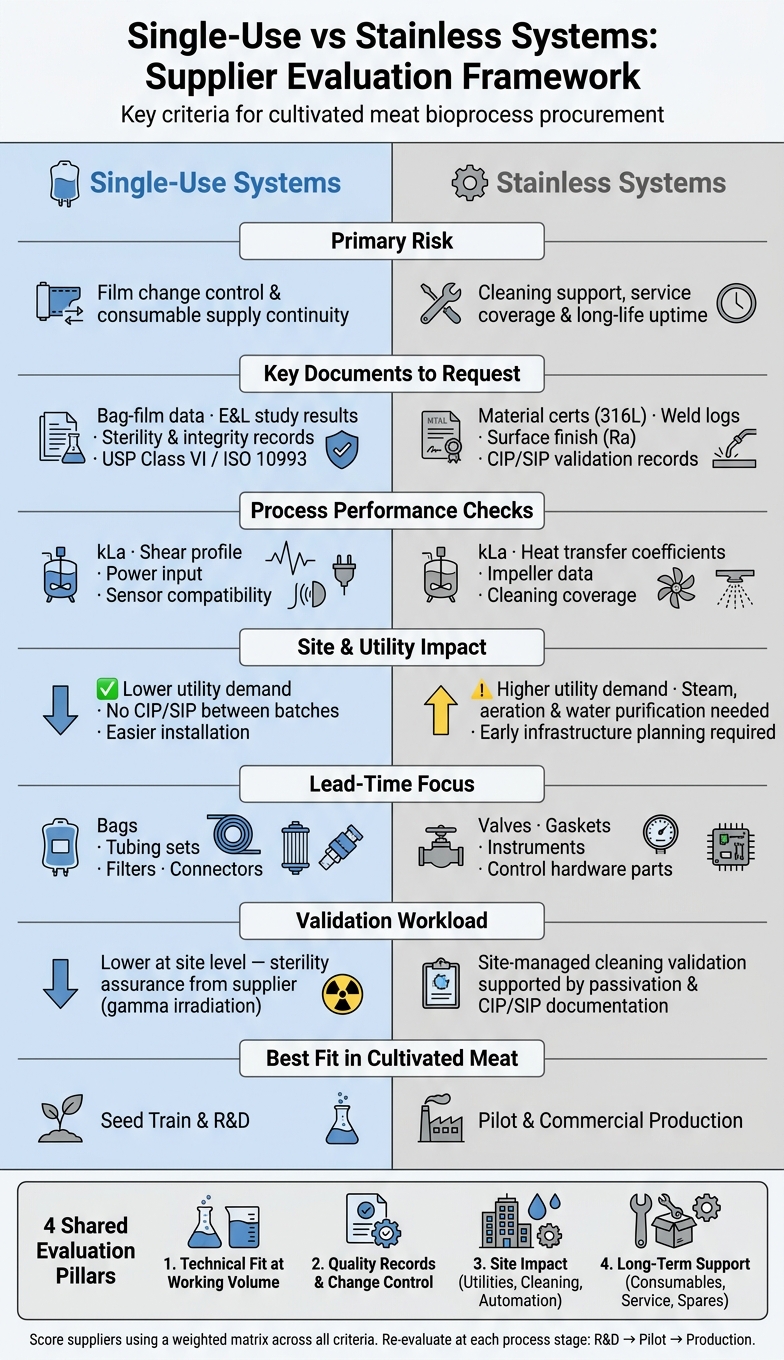
أنظمة المعالجة الحيوية ذات الاستخدام الواحد مقابل الفولاذ المقاوم للصدأ: تقييم المورد بنظرة سريعة
SU & مفاعلات حيوية من الفولاذ المقاوم للصدأ: عوامل الجودة التي يجب مراعاتها عند اختيار نظام SUABLE
sbb-itb-ffee270
مقارنة سريعة
| نقطة المراجعة | أنظمة الاستخدام الواحد | أنظمة الفولاذ المقاوم للصدأ |
|---|---|---|
| المخاطر الرئيسية للمورد | التحكم في تغيير الفيلم وتوريد المستهلكات | دعم التنظيف، الخدمة، ووقت التشغيل الطويل |
| الوثائق الرئيسية | بيانات فيلم الأكياس، E&L، سجلات التعقيم والنزاهة | شهادات المواد، سجلات اللحام، التشطيب السطحي، سجلات CIP/SIP |
| فحوصات العملية | kLa، القص، إدخال الطاقة، دعم المستشعرات | kLa، نقل الحرارة، بيانات المروحة، تغطية التنظيف |
| تأثير الموقع | طلب أقل على المرافق، لا حاجة لـ CIP/SIP بين الدفعات | طلب أعلى على المرافق، يحتاج إلى بنية تحتية لـ CIP/SIP |
| التركيز على وقت التسليم | أكياس، أنابيب، فلاتر، موصلات | صمامات، حشوات، أدوات، أجزاء التحكم |
| تناسب شائع في اللحوم المزروعة | قطار البذور وR&D | الإنتاج التجريبي والتجاري |
باختصار: سأستخدم مسار مراجعة واحد للأنظمة التي تقودها المواد الاستهلاكية وآخر للأنظمة ذات الأصول الثابتة، ثم أقيم كلاهما مقابل مرحلة العملية، وحمل التحقق، وتناسب المنشأة.
2. أنظمة الاستخدام الفردي: معايير تقييم الموردين الرئيسية
ليس جميع موردي أنظمة الاستخدام الفردي متشابهين. يتضح ذلك بمجرد أن تتجاوز النسخ الدعائية وتطلب البيانات. بالنسبة لأعمال اللحوم المستزرعة، فإن الفحوصات الرئيسية بسيطة: شفافية المواد, أداء العملية, وما إذا كان المورد يمكنه الاحتفاظ بالمواد الاستهلاكية الحرجة في المخزون دون انقطاع خطة التشغيل الخاصة بك.
2.1 بيانات فيلم الأكياس، المواد القابلة للاستخراج والرشح، والتحكم في التغيير
ابدأ بالمواد الاستهلاكية، لأنها غالبًا ما تقرر ما إذا كان يمكن تأهيل النظام والحفاظ عليه في الاستخدام.
اطلب بيانات فيلم الأكياس بتنسيق قياسي حتى يتمكن فريقك من مقارنة المكونات بشكل متكافئ. راجع بيانات المواد القابلة للاستخراج والرشح في نفس الوقت، جنبًا إلى جنب مع عملية التحكم في التغيير الخاصة بالمورد لتحديثات المواد. تحتاج التجميعات ذات الاستخدام الفردي إلى الحفاظ على التعقيم وتقليل مخاطر التلوث.
بمجرد أن تحصل على رؤية واضحة للتحكم في المواد، انتقل إلى ملاءمة العملية تحت ظروف التشغيل الخاصة بك.
2.2 أداء الخلط، خيارات التحكم ومتطلبات المرافق
يجب أخذ بيانات الخلط عند حجم العمل المقصود وتحت نفس ظروف العملية التي تتوقع تشغيلها. اطلب kLa, ملف القص وبيانات إدخال الطاقة عند ذلك الحجم. تحقق أيضًا من أن نظام التحكم يدعم المستشعرات التي يحتاجها عمليتك.
من المفيد توثيق استخدام الطاقة وطلب التبريد على النطاق التشغيلي المقصود أيضًا. يمكن أن يبدو النظام جيدًا على الورق، ثم يصبح محرجًا بمجرد أن يظهر طلب المرافق في الأرقام.
إذا كان الأداء متوافقًا، فإن القضية التالية هي استمرارية التوريد أثناء التشغيل الروتيني.
2.3 وقت تغيير الدفعة وأوقات تسليم المستهلكات
مع الأنظمة ذات الاستخدام الواحد، يعتمد وقت دوران الدفعة بشكل كبير على توفر المستهلكات.راجع أوقات التسليم للحقائب، مجموعات الأنابيب، الفلاتر، والموصلات، واسأل كيف يدير المورد استمرارية المكونات الحرجة[1].
ركز على توفر المواد الاستهلاكية وموثوقية إعادة التوريد. في الممارسة العملية، غالبًا ما يكون هذا هو الخطر الرئيسي في المشتريات الذي يجب تقييمه.
3. أنظمة الفولاذ المقاوم للصدأ: معايير تقييم الموردين الرئيسية
تحتاج أنظمة الفولاذ المقاوم للصدأ إلى مراجعة مختلفة للموردين عن الأنظمة ذات الاستخدام الواحد. مع الأنظمة ذات الاستخدام الواحد، يتركز معظم الاهتمام على الحقائب، الفلاتر والمواد الاستهلاكية الأخرى. مع الفولاذ المقاوم للصدأ، يتحول الضغط إلى الوثائق، موثوقية النظام والدعم طويل الأمد. ببساطة، تركز مراجعات الأنظمة ذات الاستخدام الواحد على المواد الاستهلاكية؛ بينما تركز مراجعات الفولاذ المقاوم للصدأ على التأهيل، الخدمة ووقت التشغيل.
3.1 شهادة المواد، التشطيب السطحي والتصميم الصحي
ابدأ بتتبع الأثر. اطلب شهادات المواد، سجلات اللحام وبيانات التشطيب السطحي.إذا كانت تلك الأوراق مفقودة، فإن فرق الجودة والهندسة لديك عادة ما ينتهي بها الأمر إلى القيام بعمل تأهيلي إضافي لاحقًا.
يحتاج التصميم الصحي إلى تدقيق دقيق. كل من قابلية التصريف وجودة اللحام يشكلان مدى قدرتك على تنظيف الوعاء بشكل جيد. يمكن أن يتسبب خزان يبدو جيدًا على ورقة البيانات في مشاكل تنظيف إذا تجمعت السوائل في الأرجل الميتة أو كانت اللحامات غير منتهية بشكل جيد.
طابق المواصفات مع مخاطر النظافة ومسارك التنظيمي. الأجزاء ذات الدرجة البيوفارما ليست دائمًا ضرورية. قبل الشراء، تحقق من المواصفات التي يحتاجها عمليتك بالفعل وأي منها يضيف فقط تكلفة وعبء تأهيل دون تحسين أداء العملية.
3.2 التحقق من التنظيف، تكبير الخلط وهندسة التحكم
تعتبر قدرة CIP وSIP في مركز تأهيل نظام الفولاذ المقاوم للصدأ. اطلب من المورد بيانات تغطية الرش، أدلة إزالة البقايا ودعم التحقق.يجب أن يُظهر حزمة التنظيف إزالة البقايا والتحكم في التلوث وفقًا للمعايير المطلوبة في موقعك.
لعملية الخلط والتوسع، اطلب بيانات من حجم العمل الذي تخطط لتشغيله، وليس فقط ظروف المختبر. هذه النقطة مهمة. الأداء الذي يبدو جيدًا في وعاء صغير لا ينتقل دائمًا بشكل نظيف إلى حجم الإنتاج. يجب أن يكون الموردون قادرين على إظهار أن الخلط ونقل الأكسجين يظلان مستقرين مع زيادة حجم الوعاء.
بالنسبة لهندسة التحكم، تحقق من أن النظام يدعم معايير العملية الحرجة التي تحتاج إلى التحكم فيها: درجة الحرارة، الرقم الهيدروجيني والأكسجين المذاب. اسأل أيضًا عن خطط التقادم لأجهزة التحكم. يمكن أن يصبح الوعاء الذي يعمل بشكل جيد مصدر إزعاج إذا كانت مكونات التحكم الرئيسية تقترب من نهاية عمرها.
3.3 الطلب على المرافق، تغطية الخدمة وأوقات تسليم قطع الغيار
عادةً ما تحتاج الأنظمة المصنوعة من الفولاذ المقاوم للصدأ إلى مرافق أكثر من نظيراتها ذات الاستخدام الواحد. توثيق الطلب على البخار، التهوية، التحريك وتنقية المياه على النطاق التشغيلي المقصود قبل بدء تخطيط التركيب. إذا تأخرت في هذه الخطوة، يمكن أن يصبح التوافق مع المنشأة مشكلة بسرعة. هذا صحيح بشكل خاص عند تحسين استخدام الطاقة للأصول الكبيرة المصنوعة من الفولاذ المقاوم للصدأ.
تغطية الخدمة وتوافر قطع الغيار مهمان بنفس القدر لوقت تشغيل المصنع. غالبًا ما يتم الاحتفاظ بالأصول المصنوعة من الفولاذ المقاوم للصدأ في الخدمة لسنوات عديدة، لذا من المنطقي طرح أسئلة مباشرة حول:
- أوقات تسليم قطع الغيار الحرجة
- جداول الصيانة الوقائية
- التخطيط للتقادم لأجهزة التحكم
استخدام قالب مقارنة قياسي بحيث تكون تغطية الخدمة، شروط الصيانة وأوقات تسليم قطع الغيار سهلة المقارنة جنبًا إلى جنب.
تغذي هذه الفحوصات مباشرة في المقارنة جنبًا إلى جنب التي تليها.
4.استخدام واحد مقابل الفولاذ المقاوم للصدأ: مقارنة الموردين جنبًا إلى جنب
الآن بعد أن أصبحت معايير كلا النوعين من الأنظمة واضحة، فإن المهمة التالية هي مقارنة الموردين في إطار عمل مشترك. هذه الفئات مختلفة بما يكفي بحيث تساعد المراجعة جنبًا إلى جنب في تجنب الحكم على أدلة غير متشابهة كما لو كانت متشابهة في الشراء، وضمان الجودة، وR&D.
4.1 مصفوفة المراجعة التقنية والجودة
يوضح الجدول أدناه الأدلة التي يجب طلبها مع كل نوع من الأنظمة. استخدمه لمقارنة تقديمات الموردين جنبًا إلى جنب.
| فئة المراجعة | أدلة المورد للاستخدام الواحد | أدلة المورد للفولاذ المقاوم للصدأ |
|---|---|---|
| الجودة والتنظيمية | بيانات فيلم الأكياس؛ نتائج دراسة E&L؛ التزامات التحكم في التغيير لتغييرات الفيلم أو الراتنج؛ USP Class VI أو ISO 10993 | شهادة المواد (e.g. 316L); تشطيب السطح (Ra); الامتثال لمعيار ASME BPE; سجلات اللحام |
| التقنية والعملية | اختبار سلامة الأكياس; kLa; أوقات الخلط | معاملات نقل الحرارة; kLa; بيانات أداء المروحة; التحقق من CIP/SIP |
| هيكل التحكم | تكامل المستشعرات الجاهزة للتوصيل والتشغيل لدرجة الحموضة، الأكسجين المذاب ودرجة الحرارة; تقارير الدفعات | تكامل PLC/SCADA; سجلات معايرة المستشعرات; برامج الأتمتة لاستراتيجيات التغذية المعقدة |
| المرافق | الطلب على الهواء المضغوط والطاقة | الطلب على البخار، التهوية والتحريك |
| سلسلة التوريد | أوقات التسليم للأكياس والأنابيب; اتفاقيات المخزون الاحتياطي | أوقات التسليم للصمامات والحشيات; دعم الخدمة المحلية |
طابق المواصفات مع احتياجات العملية، وليس مع تركيز قطاع المورد.
يجب أيضًا تقييم نفس الأدلة بناءً على تأثيرها على وقت التحول، عبء العمل في التحقق من الصحة ومدى ملاءمة المنشأة.
4.2 التحول، المرونة وعبء العمل في التحقق من الصحة: أين يناسب كل نظام
عادةً ما تقلل الأنظمة ذات الاستخدام الواحد من وقت التحول للدفعة لأن استبدال الأكياس يزيل الحاجة إلى CIP و SIP بين العمليات. المقايضة هي خطر مهلة المواد الاستهلاكية. الأصول المصنوعة من الفولاذ المقاوم للصدأ، بمجرد تأهيلها، توفر استمرارية ميكانيكية أقوى وتكون أسهل في التعديل أو الإصلاح عبر عمر تشغيل يمتد لعدة سنوات.
| الأبعاد | ميزة الاستخدام الفردي | ميزة الفولاذ المقاوم للصدأ |
|---|---|---|
| تغيير الدفعة | أسرع؛ لا حاجة لـ CIP/SIP بين الدورات | أبطأ، ولكن أقل اعتمادًا على المستهلكات |
| عبء التحقق من الصحة | أقل على مستوى الموقع؛ ضمان التعقيم من المورد (التشعيع الجاما) | التحقق من صحة التنظيف يُدار في الموقع ويدعمه التمرير والتوثيق CIP/SIP |
| مخاطر الشراء | أعلى؛ الاعتماد على المستهلكات والتعرض لوقت التسليم | أقل بالنسبة للقطع الاحتياطية؛ المرونة من خلال خيارات متعددة للمصنعين |
| استمرارية التشغيل الطويل | - | أقوى؛ الأصول تُستهلك على جداول صيانة معروفة |
| ملاءمة المنشأة | طلب أقل على المرافق؛ أسهل في التركيب | طلب أعلى على المرافق؛ يحتاج إلى تخطيط مبكر للبنية التحتية |
بمجرد أن تصبح هذه المقايضات واضحة، قم بتحويلها إلى درجة مورد موزونة.
4.3 طريقة بسيطة لتقييم فرق اللحوم المزروعة
ضع المقارنة في درجة موزونة حتى يتمكن فريق المشتريات وضمان الجودة والهندسة من تقييم الموردين على نفس الأساس. يجب أن تعكس الأوزان أولويات موقعك، وليس قالبًا عامًا.
| معيار التقييم | الأولوية المقترحة | درجة الاستخدام الفردي (1–5) | درجة الفولاذ المقاوم للصدأ (1–5) | ملاحظات |
|---|---|---|---|---|
| الأداء الفني | عالية | قارن بيانات الخلط وkLa والتوسع مع حجم العمل الخاص بك | ||
| توثيق الجودة | عالية | تحقق من E&L، التحكم في التغيير وسلامة الأكياس للاستخدام الفردي؛ شهادة المواد، التشطيب السطحي وسجلات اللحام للفولاذ المقاوم للصدأ | ||
| دعم التحقق | عالية | تقييم ضمان التعقيم والالتزامات بالتحكم في التغيير للاستخدام الفردي؛ التحقق من التنظيف، التمرير وتوثيق CIP/SIP للفولاذ المقاوم للصدأ | ||
| ملاءمة المنشأة | متوسط | وثق طلب المرافق، البصمة ومتطلبات التركيب قبل التقييم | ||
| التوافق مع الأتمتة | متوسط | تحقق من تكامل المستشعرات، تقارير الدفعات وهندسة التحكم | ||
| مرونة وقت التسليم | عالي | اطلب أسوأ أوقات التسليم للمواد الاستهلاكية أو قطع الغيار |
اضرب الدرجات في الوزن الذي اخترته، ثم اجمعها عبر المعايير لمقارنة الموردين على أساس مماثل. استخدم النتيجة كمساعد في اتخاذ القرار، وليس كبديل للمراجعة.
5. الخاتمة: اختيار إطار مراجعة المورد المناسب
بمجرد تطبيق بطاقة التقييم، يصبح اتخاذ القرار عادةً أكثر بساطة. السؤال الرئيسي هو: هل يتناسب المورد مع مرحلة العملية، الاحتياجات التقنية، ونموذج التشغيل الخاص بك؟
غالبًا ما تكون الأنظمة ذات الاستخدام الواحد منطقية في مرحلة التجريب. الفولاذ المقاوم للصدأ غالبًا ما يكون أكثر منطقية للإنتاج التجاري. النقطة هي مطابقة معايير المراجعة مع مرحلة العملية، وليس مع نوع النظام المفضل.
استخدم نفس أساس التقييم عند المقارنة:
- E&L
- شهادة المواد
- تحقق التنظيف
- أداء الخلط
- طلب المرافق
- أوقات التسليم
إذا كانت فريقك يقارن الموردين من خلال مصدر واحد،
تعامل مع الإطار كأنه بطاقة تقييم عملية، وليس تمرينًا لمرة واحدة. أعد تقييم الموردين مع انتقال العملية من R&D إلى الطيار ثم إلى الإنتاج. قد يكون المورد مناسبًا في مرحلة معينة ولكنه قد لا يكون مناسبًا في المرحلة التالية.
الأسئلة الشائعة
متى يجب أن ننتقل من الاستخدام الواحد إلى الفولاذ المقاوم للصدأ؟
يعتمد الأمر بشكل كبير على حجم الإنتاج، اتساق العملية، وكيفية تشغيل المنشأة يوميًا.
تميل الأنظمة ذات الاستخدام الواحد إلى أن تكون مناسبة بشكل أفضل للبحث، والعمل على نطاق تجريبي، وإنتاج الدفعات الصغيرة. كما أنها تكون منطقية عندما تتغير احتياجات العملية بشكل متكرر. لماذا؟ لأنها تزيل الحاجة إلى التنظيف والتعقيم المكثف بين الدورات.
عادةً ما تكون الأنظمة المصنوعة من الفولاذ المقاوم للصدأ أكثر منطقية على المدى الطويل عندما يكون الإنتاج عالي الحجم وثابت الحالة. على النطاق الصناعي - على سبيل المثال، أكثر من 500 كجم شهريًا - يصبح الانتقال إلى الفولاذ المقاوم للصدأ غالبًا الخيار الأكثر كفاءة.
ما هي الوثائق التي يقدمها المورد والتي تهم أكثر قبل التأهيل؟
قبل التأهيل، يجب على الموردين تقديم الوثائق الأساسية اللازمة للتحقق من الجودة والامتثال.عادةً ما يشمل ذلك:
- شهادات التحليل للمواد الخام
- ملفات التحقق للمفاعلات الحيوية والمعدات التحليلية
- وثائق المواد القابلة للرشح والاستخلاص
تساعد هذه السجلات في تأكيد أن النظام يعمل كما هو متوقع، وهو مناسب للتصنيع المعقم، ويتماشى مع المعايير مثل EU GMP Annex 1.
كيف يجب أن نوازن بين مخاطر التوريد وأداء العملية؟
وازن بين ما تحتاجه عمليتك في المختبر وعلى أرضية التصنيع وما يمكن للمشتريات توفيره بشكل موثوق. يمكن للأنظمة ذات الاستخدام الواحد تحسين أداء العملية لأنها تزيل خطوات التنظيف والتعقيم وتقلل من خطر التلوث المتبادل. المقايضة بسيطة: تصبح أكثر اعتمادًا على توريد ثابت للمواد الاستهلاكية عالية الجودة.
في الأبحاث والعمل على نطاق تجريبي، غالبًا ما تجعل هذه المرونة الأنظمة ذات الاستخدام الواحد مناسبة.في الإنتاج التجاري، تعتبر استقرار سلسلة التوريد أكثر أهمية بكثير. وفي عملية التدفق المستمر، يعتبر الوصول الموثوق إلى المكونات المتخصصة بنفس أهمية تصميم العملية نفسه.


