

إذا كنت تختار دائرة مراقبة لخلايا اللحوم المستزرعة، فالجواب المختصر هو: لا يوجد تصميم واحد مثالي. ما تختاره يعتمد على عبء الخلية, تحديد الإشارة, سرعة الاستجابة, وكيفية استمرار عمل التركيب بشكل جيد بعد 30–50+ تضاعف وتكرار التمرير.
أرى أن المقالة تقدم أربع نقاط واضحة:
- دوائر المحفزات القابلة للتحفيز هي الأبسط في البناء وتناسب اختبارات نقاط التفتيش المبكرة، لكنها عادة ما تقرأ مدخل واحد في كل مرة.
- الدوائر ذات التحكم المرتد تناسب مراقبة المفاعلات الحيوية لأنها يمكن أن تعدل المخرجات مع تغير حالة الخلية، على الرغم من أنها تضيف عبء طبقة التحكم.
- دوائر البوابات المنطقية تقلل من الإيجابيات الكاذبة عن طريق دمج الإشارات، لكن كل بوابة مضافة تزيد من عبء التصميم وخطر الانجراف.
- أنظمة المراسل المتعددة تقدم أوسع نظرة على حالة الخلية، ومع ذلك فإنها غالبًا ما تضع أعلى طلب على الموارد على الخلية.
بالنسبة لمهندسي العمليات الحيوية في المملكة المتحدة وفرق زراعة الخلايا، فإن القرار العملي لا يتعلق بالأناقة. بل يتعلق بأي دائرة لا تزال تعطي إشارة واضحة بعد التوسع, تحت الثقافة المحركة، ومع مجموعات العلامات التي لا تزال قليلة في العديد من الأنواع الزراعية.
مقارنة سريعة
| نوع الدائرة | ما تفعله بشكل أفضل | الحد الرئيسي | أفضل حالة استخدام |
|---|---|---|---|
| المحفز القابل للتحفيز | قراءة بسيطة بحالة واحدة | مدخل واحد فقط | البحث والتطوير المبكر وفحوصات انتقال المرحلة |
| تحكم بالتغذية الراجعة | تتبع الحالة في حلقة مغلقة | زيادة الحمل التنظيمي | تشغيلات طويلة ومراقبة المفاعلات الحيوية |
| بوابة منطقية | تحديد أعلى من قواعد متعددة المدخلات | المزيد من الانحراف وخطر الصمت | التمييز بين التمايز والإجهاد |
| مراسل متعدد الإرسال | تحليل متعدد الإشارات في نفس الوقت | عبء خلوي عالي وخطر التداخل | استنساخ الفحص وتتبع حالة العملية بشكل واسع |
لذلك، إذا كنت تريد قاعدة بسيطة، فسأضعها على هذا النحو: استخدم الأنظمة القابلة للتحفيز للتحقق، والدوائر المرتدة للتحكم، وبوابات المنطق لاتخاذ قرارات أنظف، ولوحات متعددة عندما تحتاج إلى صورة أوسع لحالة الخلية.
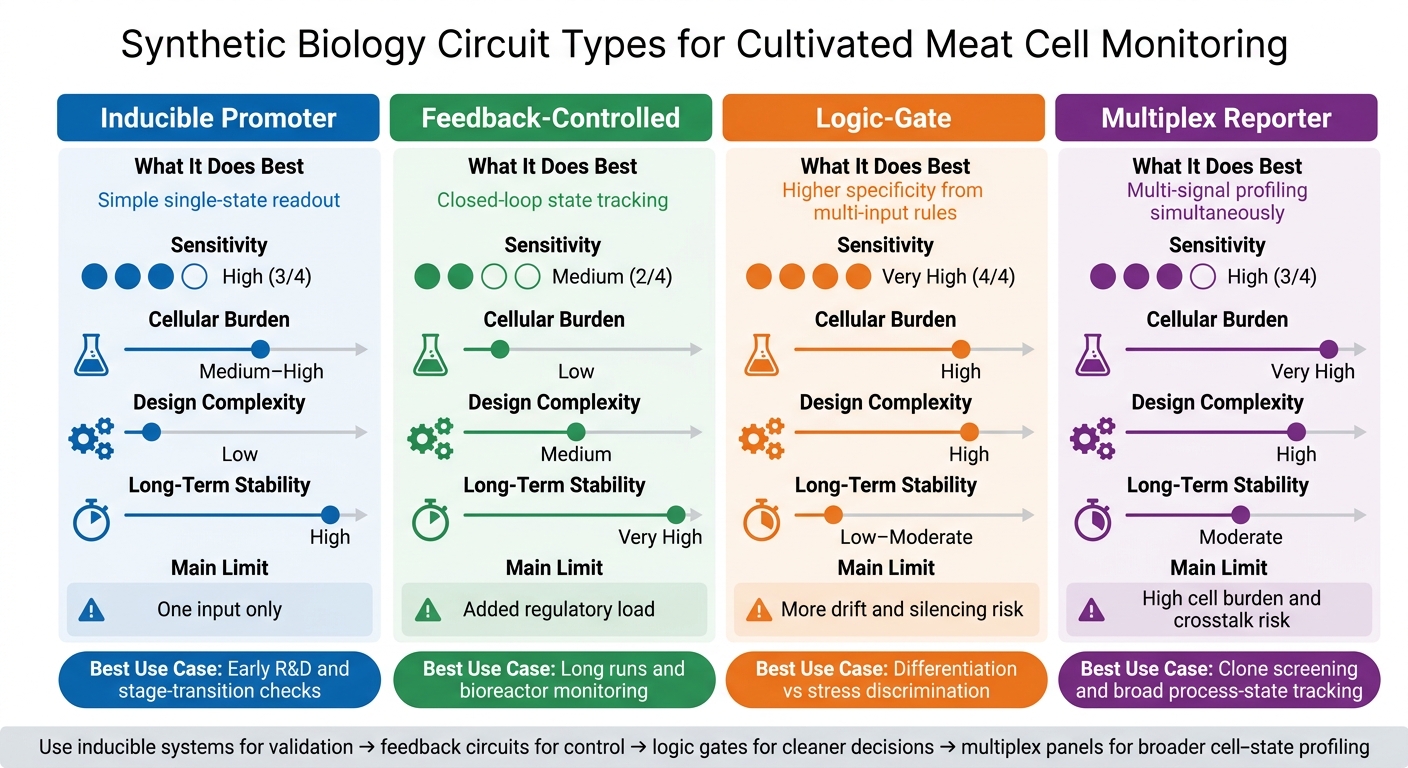
أنواع الدوائر البيولوجية التركيبية للحوم المزروعة: نظرة سريعة على المقايضات الرئيسية
ندوة بناء الخلية تاي سوك مون: الأنظمة والبيولوجيا التركيبية: بناء الميكروبات الذكية
1. دوائر المحفزات القابلة للتحفيز
يؤدي التحفيز المحدد إلى تشغيل محفز، والذي بدوره يقود تعبير جين المراسل أو المؤثر.
عبء الدائرة
عادةً ما تكون دوائر المحفزات القابلة للتحفيز مدمجة، لذا فإنها تضع حملاً أيضياً أقل على الخلايا مقارنةً بتصميمات الدوائر الأكثر تعقيدًا. وهذا مهم في عمل اللحوم المزروعة، حيث تحتاج أنظمة المراقبة إلى أن تبقى خفيفة قدر الإمكان إذا كانت خطوط الخلايا ستستمر في النمو بشكل جيد [1].
ديناميكيات الاستجابة
يعتمد وقت الاستجابة على كل من المحفز والمراسل. تميل هذه الدوائر إلى العمل بشكل أفضل عندما تكون حالة الخلية المستهدفة محددة بوضوح بالفعل.في اللحوم المزروعة، يمكن أن يكون ذلك نقطة خلاف لأن الأنواع الزراعية لا تزال تفتقر إلى نفس عمق العلامات المعتمدة التي تُرى في الأنظمة النموذجية. ونتيجة لذلك، يصبح بناء دوائر مراقبة عالية التحديد أصعب [1].
الاستقرار عبر الممرات
مع التمرير الممتد، يمكن أن تنحرف أداء الدائرة بسبب الطفرات والاختيار. وهذا يعني أن الاختبارات الوظيفية المنتظمة ضرورية، إلى جانب الفحوصات الدورية متعددة الأوميكس للتأكد من أن الدائرة لا تزال تقوم بما يجب عليها القيام به [4].
ملاءمة خط إنتاج اللحوم المزروعة
المحفزات القابلة للتحفيز مفيدة بشكل خاص في الانتقال من التكاثر إلى التمايز، وهو أحد نقاط التحكم الرئيسية في خط إنتاج اللحوم المزروعة [3][4]. إنها مناسبة جيدة لذلك التحول. ولكن هناك مشكلة: لا يزال محفز واحد قابل للتحفيز يبلغ عن مدخل واحد فقط.هذا الحد من المدخلات الفردية هو السبب في أن الدوائر ذات التحكم بالتغذية الراجعة يمكن أن تكون خيارًا أفضل عندما تكون هناك حاجة إلى تحكم أكثر دقة.
2. الدوائر ذات التحكم بالتغذية الراجعة
المحفزات القابلة للتحفيز تستجيب لمدخل واحد محدد. الدوائر ذات التحكم بالتغذية الراجعة تقوم بأكثر من ذلك: فهي تعدل المخرجات بناءً على الحالة التي تراقبها، بحيث يغلق النظام الحلقة في الوقت الحقيقي [2].
عبء الدائرة
تأتي هذه السيطرة الإضافية بتكلفة. تضيف دوائر التغذية الراجعة حملاً تنظيمياً، لذا يجب أن يبقى التصميم خفيفًا بما يكفي لخلايا اللحوم المزروعة التي تتوسع عبر العديد من المراحل [1].
ديناميكيات الاستجابة
يمكن لأنظمة الاستشعار الخلوية الكاملة تتبع النشاط التنفسي، ويمكن أن تشير التغيرات في التنفس إلى تغييرات في امتصاص الركيزة أو الإجهاد السام [2]. في الممارسة العملية، يمنح ذلك فرق العمليات طريقة لرؤية تغييرات حالة الخلية كما تحدث، وليس بعد ساعات من اختبار غير متصل.
إذا كان النظام يستخدم محولات كيميائية كهربائية، فإن الأقطاب القطبية توفر قراءات أسرع وأكثر استقرارًا من الأقطاب الجلفانية [2]. هذا مهم في التحكم في العمليات الحيوية. الإشارة التي تنحرف أو تتأخر يصعب الوثوق بها عندما تحاول فصل تحول أيضي عابر عن بداية حدث فشل.
ومع ذلك، فإن الاستشعار السريع بمفرده ليس كافيًا. يجب أن يستمر الدائرة في التصرف بنفس الطريقة عبر الممرات.
الاستقرار عبر الممرات
يزيد الثقافة المستمرة من خطر الطفرات، لذا من المنطقي التحقق من الاستقرار الجيني في فترات مرور ثابتة باستخدام تسلسل الجينوم الكامل أو RNA-seq. يتيح ذلك للفرق تحديد نافذة المرور قبل أن يبدأ الانجراف الجيني في التأثير على أداء الدائرة [4].
"الخلايا المحفوظة في الثقافة المستمرة عرضة لتراكم الطفرات الجينية بمرور الوقت، ويرجع ذلك أساسًا إلى أخطاء النسخ، والإجهاد البيئي، وشيخوخة خطوط الخلايا." - الله بخش وآخرون [4]
بالنسبة لأبحاث وتطوير اللحوم المزروعة، هذه نقطة تحكم عملية. إذا تغير ناتج الدائرة بمرور الوقت، تحتاج إلى معرفة ما إذا كان السبب هو الوسائط، أو ظروف العملية، أو الخلايا نفسها.
خط أنابيب اللحوم المزروعة مناسب
هذا الهيكل يناسب مراقبة مقياس المفاعل الحيوي، حيث تكون القراءات المستمرة لصحة الخلايا والنشاط الأيضي الأكثر فائدة [2]. في هذا السياق، يكون التحكم في التغذية الراجعة أقل عن تصميم الدوائر الفاخرة وأكثر عن الحصول على إشارة مستقرة وقابلة للقراءة التي لا تزال تعمل بعد التوسع.
3.دوائر البوابات المنطقية
تجمع دوائر البوابات المنطقية بين مدخلات متعددة وتنتج مخرجًا فقط عندما يكون هناك مجموعة معينة موجودة [1].
هذا يجعلها مفيدة عندما لا يخبرك إشارة واحدة بمفردها بالكثير. في زراعة الخلايا، هذا هو الحال غالبًا. يمكن أن يعكس مؤشر واحد التمايز أو الإجهاد أو نقص المغذيات أو مزيجًا من هذه. يساعد تصميم البوابات المنطقية في فصل هذه الحالات بشكل أنظف.
الجانب السلبي واضح: كل مدخل إضافي يزيد من تعقيد التصميم ويزيد من الحمل الخلوي.
عبء الدائرة
كل بوابة إضافية تضيف عبءًا أيضيًا، لذا يجب أن تبقى الدائرة خفيفة بما يكفي لعدم قمع النمو أثناء التوسع [1]. إذا كان البناء ثقيلًا جدًا، فقد يعمل المخرج في الاختبارات المبكرة ولكنه يصبح مشكلة بمجرد أن يتم دفع الثقافة بشكل أكبر في الأنظمة المحركة أو عبر العديد من الممرات.
عادةً ما تكون الخطوط المخلدة هي الأنسب هنا لأنها تتصرف بشكل أكثر توقعًا على مدى 30-50+ تضاعف [1].
ديناميكيات الاستجابة
بوابات AND مناسبة لاستشعار المغذيات المشتركة. يمكن استخدام بوابات NOT وNAND لاكتشاف المستقلبات المثبطة مثل الأمونيا أو اللاكتات، إما للإبلاغ عن ظروف نمو مناسبة أو للإشارة إلى أن العملية البيولوجية تتجه نحو الفشل [1][2].
إضافة المزيد من المدخلات يمكن أن يحسن التمييز. لكن لا يوجد غداء مجاني: كل مدخل جديد يضيف أيضًا مكانًا آخر يمكن أن يفشل فيه الدائرة، خاصة عبر التمريرات المتكررة.
الاستقرار عبر التمريرات
مع تعقيد بنية البوابة، يزداد خطر الصمت أو الانجراف الطفري عبر التمريرات أيضًا [1].
هذا مهم في حملات الثقافة الطويلة.دائرة تعمل بشكل نظيف في اختبار قصير قد تنحرف بمرور الوقت بما يكفي لتشويش الإشارة، مما يجعل استقرار النقل مهمًا بقدر أهمية منطق البوابة الأولي.
خط إنتاج اللحوم المزروعة مناسب
دوائر منطق البوابات تكون أكثر فائدة على نطاق المفاعل الحيوي، حيث تتغير عدة متغيرات عملية في نفس الوقت ولا يمكن لمستشعر حيوي ذو مدخل واحد التمييز بشكل موثوق، على سبيل المثال، بين حدث التمايز واستجابة الإجهاد. بوابة AND التي تتطلب كل من علامة التمايز وغياب علامة الإجهاد قبل تشغيل المراسل تقلل من الإيجابيات الكاذبة بطريقة لا يمكن لمستشعر حيوي ذو مدخل واحد أن يضاهيها [1][2].
يصبح هذا أصعب في الأنواع الزراعية غير المميزة بشكل كافٍ، خاصة الرخويات والقشريات، حيث تكون العلامات المعتمدة نادرة [1].
حيث تكون مجموعات العلامات نادرة، يمكن للمراسلين المتعددين التقاط المزيد من حالة العملية دون إضافة طبقة بوابة أخرى.
sbb-itb-ffee270
4. أنظمة المراسلين المتعددين
حيث تقوم بوابات المنطق بتصفية الإشارات، يقوم المراسلون المتعددون بالعكس. يتيحون لك تتبع عدة إشارات لحالة الخلية في نفس الوقت بدلاً من إجبار كل شيء على قراءة واحدة.
عبء الدائرة
كل مراسل مضاف يستنزف من موارد الخلية. في الممارسة العملية، يعني ذلك أن اللوحة يجب أن تبقى صغيرة قدر الإمكان مع الاستمرار في الإجابة على سؤال العملية.
ديناميات الاستجابة
لتحكم في العمليات الحيوية في الوقت الحقيقي، تكون المستشعرات القائمة على الوسيط أكثر ملاءمة للقراءات السريعة لأن الأكسجين المذاب لا يشوه الإشارة [2].
الاستقرار عبر الممرات
يمكن أن يتلاشى ناتج المراسل بمرور الوقت حيث يؤدي الانجراف الجيني إلى إسكات أو تغيير البنية. حدد عددًا أقصى للممرات، ثم تحقق من أداء المراسل على فترات منتظمة بدلاً من افتراض أن الإشارة لا تزال تعني ما كانت عليه في البداية [4].
ملاءمة خط إنتاج اللحوم المزروعة
يكون هذا النوع من القراءة الأوسع أهمية عندما تكون مجموعات العلامات لا تزال قليلة. وهذا يجعل الأنظمة المتعددة الأكثر فائدة في فحص النسخ ومراقبة المفاعلات الحيوية.
في مرحلة فحص النسخ، يمكن أن تساعد تقنية RNA-seq للخلايا المفردة وتدفق الخلايا في فصل التجمعات المختلطة قبل التوسع. وهذا مهم لأن النسخة يمكن أن تبدو جيدة في الكتلة بينما تخفي تجمعات فرعية تتصرف بشكل مختلف تمامًا بمجرد أن تدفع ظروف الثقافة بشكل أكبر.
على نطاق المفاعل الحيوي، يمكن أن يساعد المراقبة المتعددة في تحديد الملوثات، بقايا المضادات الحيوية والميكوبلازما [4].
| التحدي | التأثير على الأنظمة المتعددة | استراتيجية التخفيف |
|---|---|---|
| عدم الكفاءة الأيضية | يحد من قابلية التوسع ويزيد من عبء المراسلين الإضافيين [1] | تكامل متعدد الأوميكس وتحسين الشبكة [1] |
| الانحراف الجيني | يمكن أن يسبب فقدان أو تحور المراسل عبر الممرات [4] | المراقبة الجينية المنتظمة وحدود عدد الممرات [4] |
| التداخل الإشاري | التداخل بين المراسلين المعبرين معًا | تكامل متعدد الأوميكس واستشعار قائم على الوسيط [1][2] |
المقايضات، المزايا والقيود
عبر جميع الهياكل الأربعة، تحدد نفس الأسئلة الثلاثة ما إذا كان الدائرة تستحق الاستخدام: العبء، التخصص والاستقرار.
كل واحد منها يقع في مكان مختلف على ذلك التوازن الثلاثي. بعضها سهل البناء ولكنه يضيف حملاً أكبر على الخلية. البعض الآخر يصمد بشكل أفضل على مدى فترات زراعة طويلة ولكنه يعطيك حساسية أقل أو قراءة أقل تفصيلاً. الجدول أدناه يجمع هذه التنازلات في عرض لاختيار العملية.
| هندسة الدوائر | الحساسية | العبء الخلوي | تعقيد التصميم | الاستقرار طويل الأمد | أفضل ملاءمة |
|---|---|---|---|---|---|
| المحفز القابل للتحفيز | عالي | متوسط–عالي | منخفض | عالي | قصير الأمد R&D، دراسات تجريبية |
| تحكم بالتغذية الراجعة | متوسط | منخفض | متوسط | عالي جداً | تمرير طويل الأمد، التوسع |
| بوابة منطقية | عالي جداً | عالي | عالي | منخفض–متوسط | مراقبة التمايز حيث تهم الإيجابيات الكاذبة |
| مراسل متعدد الإرسال | عالي | عالي جدًا | عالي | معتدل | مراقبة متعددة المسارات أثناء فحص النسخ والتوسع |
في الممارسة العملية، هذا هو التوازن النهائي بين البساطة، التحكم وكثافة المعلومات. نظام المروج القابل للتحفيز يكون غالبًا أسهل في النشر في البداية. التصميم الذي يتم التحكم فيه بالتغذية الراجعة يميل إلى أن يكون مناسبًا للجولات الأطول حيث تصبح الانحراف والعبء مشاكل أكبر. يمكن أن تكون دوائر البوابات المنطقية تستحق الجهد الإضافي في التصميم عندما تكون خصوصية الإشارة أكثر أهمية من سهولة الاستخدام. تعطي المراسلون المتعددون صورة أغنى، لكن تلك القراءة الإضافية تأتي بتكلفة داخل الخلية.
بالنسبة لعمليات المعالجة الحيوية طويلة الأمد، لا يعتمد اختيار الدائرة على نفسه فقط. الأداء يعتمد أيضًا على مجموعة المراقبة المحيطة، بما في ذلك جودة خط الخلايا، أجهزة الاستشعار والمعدات الحيوية المتوافقة.
الخاتمة
لا توجد دائرة واحدة تناسب كل سير عمل اللحوم المزروعة. يعتمد الاختيار الصحيح على عبء الخلية, الخصوصية, الاستقرار, ومرحلة التطوير.
تعمل دوائر المروج القابلة للتحفيز بشكل جيد للتحقق المبكر ونقاط التفتيش الروتينية.تُعتبر الدوائر ذات التحكم بالتغذية الراجعة أكثر ملاءمة للاستقرار طويل الأمد خلال التمرير الممتد وتشغيل المفاعلات الحيوية. تكون دوائر البوابات المنطقية أكثر منطقية عندما تكون الخصوصية أكثر أهمية من البساطة. توفر أنظمة المراسل المتعددة أغنى القراءات، لكنها تأتي أيضًا بأعلى تكلفة أيضية.
عند النظر إليها مجتمعة، تتماشى هذه الأنواع من الدوائر مع أجزاء مختلفة من خط أنابيب المراقبة: التحقق من الصحة, التحكم, التمييز, و التوصيف الواسع. في الممارسة العملية، تكون أفضل دائرة هي التي تناسب مهمة المراقبة مع إضافة أقل عبء ممكن.
الأسئلة الشائعة
كيف أختار الدائرة المناسبة لمرحلة التطوير الخاصة بي؟
اختر دائرة البيولوجيا التركيبية من خلال موازنة عبء الدائرة, وقت الاستجابة، والاستقرار طويل الأمد عبر التمريرات.
في البحث في المراحل المبكرة، ضع المرونة وسهولة الاختبار في المقام الأول.أنت تريد شيئًا يمكنك بناؤه، تبديله، وتصحيحه دون إضاعة أسابيع في إعادة التصميم.
بالنسبة للإنتاج، يتغير التوازن. في تلك المرحلة، تصبح البنى المستقرة والمتينة أكثر أهمية، خاصة إذا كانت تحتاج إلى الأداء في المفاعلات الحيوية الكبيرة دون إضافة عبء أيضي كبير.
ما الذي يسبب عادة انجراف الدائرة بعد التمرير المتكرر؟
عادة ما يعود انجراف الدائرة بعد التمرير المتكرر إلى شيء واحد: الخلايا تتوقف عن الظهور جينيًا مثل الخلايا التي بدأت بها.
في الممارسة العملية، يعني ذلك غالبًا استقرارًا جينيًا أقل، خاصة التحولات في عدد نسخ الجينات مثل تعدد الصبغيات، إلى جانب التأثيرات غير المستهدفة غير المقصودة التي تم إدخالها أثناء التحرير.
هذا مهم لأن هذه التغييرات يمكن أن تحرف سلوك الدائرة.قد تبدو القراءة إيجابية، ولكن قد يكون الإشارة ناتجة عن الانحراف الجيني بدلاً من التعديل الذي كنت تقصد اختباره. النتيجة هي بيانات غير متسقة، إيجابيات كاذبة، أو كلاهما.
طريقة شائعة لمتابعة ذلك هي اختبار اللياقة الخلوية. تستخدم الفرق هذا الاختبار لمراقبة الإدخالات خارج الإطار بمرور الوقت وللتحقق من أن التغيرات في سلوك الخلايا تعود إلى التعديلات الجينية المقصودة، وليس التغيرات الخلفية التي تراكمت عبر الممرات.
كيف يمكنني تقليل عبء الخلايا دون فقدان جودة الإشارة؟
قلل من التدخل وتجنب قراءة الإشارات الخاطئة الناتجة عن التغيرات في حجم الخلايا أو التحولات في الوسط. حيثما أمكن، استخدم المراقبة عبر الإنترنت، في الموقع حتى لا تضطر إلى سحب عينات من العملية.
إذا كنت تستخدم مستشعرات تعتمد على السعة أو المقاومة، اختر المسح بالسعة متعددة الترددات. هذا يجعل من السهل فصل رقم الخلية عن تأثيرات حجم الخلية، وهو أمر مهم للغاية بمجرد أن تبدأ المورفولوجيا في الانجراف.
في إعدادات المراقبة المتعددة، استخدم الخوارزميات التي يمكنها تصفية الانخفاضات القصيرة الأمد الناتجة عن التغذية أو التخفيف. وإلا، فمن السهل التعامل مع اضطراب عملية روتينية كتغيير بيولوجي عندما لا يكون كذلك.


