

Serum-free media is reshaping cultivated meat production by replacing foetal bovine serum (FBS) with defined, animal-free formulations. This shift addresses cost, ethical, and regulatory challenges while improving consistency and scalability. Key strategies include:
- Cost Reduction: Food-grade basal media cuts costs by up to 82% at scale.
- Tailored Formulations: Nutrient needs vary by species, cell type, and growth phase (proliferation vs differentiation).
- Growth Factors: Components like FGF2, insulin, and selenium support cell growth and viability.
- Ammonia Control: Alternatives to glutamine prevent metabolic inhibitors.
- Sourcing: Platforms like Cellbase simplify procurement of media components.
Precision techniques, such as metabolomics and Design of Experiments (DOE), optimise formulations for better cell growth and differentiation. This makes cultivated meat production more efficient and scalable while meeting strict food safety standards.
Dr. Peter Stogios: Low-cost growth factors for serum-free media
Core Components of Serum-Free Media
Creating effective serum-free media requires careful attention to the role of each component. These formulations typically combine a basal medium with precisely chosen supplements, ensuring cells receive the nutrients needed for growth and differentiation - key steps in cultivated meat production.
Basal Media and Nutrient Categories
At the heart of any serum-free formulation is the basal medium, which provides essential nutrients like glucose, amino acids, vitamins, and pH buffering agents. These are fundamental for cellular metabolism. Among the commonly used basal media, DMEM/F-12 stands out. It blends the nutrient richness of DMEM with the diverse composition of Ham's F12, making it suitable for the wide variety of cell types used in cultivated meat production [2]. Another option is Ham's F10, which has proven effective in formulations that replace foetal bovine serum with defined components [2].
Glucose serves as the primary energy source, with concentrations typically ranging from 0 to 5 g/L, depending on the metabolic needs of the cell line. For instance, research on CHO cells found that optimising glucose at 1.4 g/L resulted in a peak recombinant protein yield of 3.5 g/L [3]. Amino acids and vitamins are equally critical - amino acids act as building blocks for proteins and energy metabolism, while vitamins function as cofactors in enzymatic processes.
Maintaining an optimal pH is crucial, achieved through buffering systems that stabilise cellular function and prevent metabolic disturbances. Trace elements like iron, magnesium, calcium, and zinc are indispensable as cofactors for enzymes and in cellular signalling. Chelating agents such as EDTA regulate these metal ions, preventing the formation of reactive oxygen species and supporting enzyme activity [4].
One challenge in serum-free formulations is managing ammonia, a growth inhibitor produced during glutamine metabolism. To address this, researchers like Hubalek and colleagues developed a serum-free medium that replaces GlutaMAX with non-ammonia-producing compounds such as α-ketoglutarate, glutamate, and pyruvate. This innovation not only maintained comparable short-term cell growth without ammonia build-up but also enhanced the adipogenic capacity of fibro-adipogenic progenitors by 2.1 times [2]. These foundational nutrients set the stage for the next layer of supplementation.
Growth Factors and Recombinant Proteins
Once the basic nutrients are optimised, growth factors are introduced to fine-tune the serum-free formulations. These molecules bind to cell surface receptors, activating signalling pathways that encourage cell division, survival, and metabolic function. Among these, Fibroblast Growth Factor 2 (FGF2) is widely used due to its ability to promote cell proliferation and maintain viability. Depending on the cell type and desired outcome, additional factors like Transforming Growth Factor and Epidermal Growth Factor may also be incorporated [2].
Other critical components include insulin, transferrin, and selenium. Insulin plays a dual role as a metabolic regulator and a growth promoter. Transferrin is essential for iron transport and DNA synthesis, while selenium acts as a cofactor for antioxidant enzymes, shielding cells from oxidative damage. Using defined concentrations of these components improves consistency and minimises batch-to-batch variability [3].
Carrier proteins like bovine serum albumin (BSA) and recombinant albumin also play a pivotal role. They transport lipophilic hormones and growth factors, buffer pH, and protect delicate proteins from denaturation. While BSA is a proven supplement for cell growth - especially in CHO cell cultures - recombinant albumin offers similar benefits without relying on animal-derived materials. This not only enhances consistency but also addresses regulatory concerns tied to cultivated meat production [2][3]. Choosing the right carrier protein often involves balancing cost, performance, and sustainability goals.
Advances in omics and transcriptomics are now helping to identify the unique nutrient needs of specific cell types. This data-driven approach is paving the way for more cost-effective and efficient formulations, propelling cultivated meat production into a new era of precision and scalability.
Optimising Media for Cell Proliferation and Differentiation
Designing serum-free media that meet the specific needs of each growth phase requires careful attention to the changing nutrient demands of cells. Instead of sticking to one formula throughout the cultivation process, researchers are finding that customised media for each phase produce better outcomes.
Proliferation Phase Requirements
During the proliferation phase, the focus is on achieving rapid and sustained cell growth. The nutrient mix must support active metabolism, DNA synthesis, and frequent cell division. Key supplements like insulin, transferrin, and selenium are widely used to boost proliferation rates across various cell types [3].
Glucose plays a critical role in this phase. The concentration must be carefully balanced - too little limits energy availability, while too much can lead to lactate build-up and metabolic stress.
Another challenge is managing ammonia levels. Traditional glutamine sources produce ammonia during metabolism, which can inhibit growth. To address this, researchers have replaced GlutaMAX with alternatives like α-ketoglutarate, glutamate, and pyruvate. These compounds feed into the TCA cycle or glutaminolysis pathways without generating ammonia, supporting growth while eliminating this by-product [2].
Structured methods like Design of Experiments (DOE) and Response Surface Methodology help take the guesswork out of media optimisation. For example, a study using a Box–Behnken design optimised four factors - insulin, transferrin, selenium, and glucose - for CHO cells. The ideal concentrations were determined as insulin at 1.1 g/L, transferrin at 0.545 g/L, selenium at 0.000724 g/L, and glucose at 1.4 g/L, achieving a desirability score of 1.0 [3].
In another example, Lin and colleagues used intracellular metabolomics to screen 28 metabolites for chicken fibroblasts. By applying DOE, they achieved a 40.72% increase in cell growth compared to baseline media [6].
Once the proliferation phase is optimised, the next step is to adjust the media to initiate differentiation.
Differentiation Phase Adjustments
When cells reach their desired density, the media composition must shift to promote differentiation instead of proliferation. This phase requires different metabolic signals to activate lineage-specific pathways, particularly for cultivated meat production.
Interestingly, the same non-ammonia-producing compounds that aid proliferation also enhance differentiation. For instance, fibro-adipogenic progenitors cultured in media containing pyruvate and α-ketoglutarate maintained their ability to differentiate and avoided ammonia build-up. These cells showed a 2.1-fold increase in adipogenic capacity compared to those grown in GlutaMAX-based media [2].
Transcriptomic techniques offer another way to tailor differentiation media. Messmer and colleagues identified surface receptors that are upregulated during myogenic differentiation under serum starvation. By testing ligands for these receptors, they created a serum-free medium specifically designed for muscle cell development [6].
The takeaway? Differentiation media must be crafted to deliver the biological signals that naturally drive lineage commitment in the target cell type.
Species-Specific and Cell-Type Tailoring
Even after phase-specific optimisation, media formulations often need to be fine-tuned for each species and cell type. A one-size-fits-all serum-free medium simply doesn’t exist. Nutritional needs can vary significantly between bovine, porcine, and poultry cells - and even among cell types from the same species [6].
Some companies have demonstrated how thoughtful ingredient selection can achieve multi-species compatibility. For example, IntegriCulture Inc. and JT Group developed a food-grade formulation called I-MEM2.0, which supported the growth of bovine skeletal muscle cells, duck liver cells, and five types of chicken primary cells [6].
Metabolomics can pinpoint the unique metabolic demands of specific cells. The chicken fibroblast study, for instance, identified growth-promoting metabolites responsible for differences in basal media performance [6]. Similarly, a multi-step approach to creating animal component-free media tested various supplement combinations for NIH 3T3 fibroblasts and later adapted the formula for three other cell lines [5]. While core components like insulin, transferrin, and selenium remain essential, their ideal concentrations and the surrounding nutrient matrix often vary by cell type.
Even the choice of basal medium reflects cell-type needs. DMEM/F-12 is a popular choice because it combines the high nutrient content of DMEM with the diverse components of Ham's F12, making it suitable for a wide range of adherent cells [2]. On the other hand, Ham's F10 has been effective in specific cases, especially when serum is replaced with defined components [2].
| Optimisation Approach | Application | Key Result |
|---|---|---|
| Metabolomics + DOE | Chicken fibroblasts | 40.72% higher cell growth with 28 optimised metabolites [6] |
| Transcriptomics | Myogenic differentiation | Identified upregulated receptors to formulate differentiation medium [6] |
| Component substitution | Multi-species medium | Reduced 31 components to 16; supported bovine, duck, and 5 chicken cell types [6] |
| Plackett–Burman screening | HEK293 cells | Identified MgSO₄, EDTA, and iron citrate as key growth factors [4] |
Minerals like iron, magnesium, calcium, and zinc also play a crucial role in optimising cell growth and viability, with their ideal levels varying by cell type [4]. For example, a Pareto analysis of HEK293 cell culture revealed that while higher magnesium sulphate and EDTA levels hinder growth, increased ammonium iron (III) citrate significantly boosted it [4].
The main takeaway? Customised formulations for proliferation and differentiation phases, along with species and cell-type-specific adjustments, are essential. Validating these formulations across target cells before scaling up production can lead to better cell performance, shorter culture times, and more efficient cultivated meat production [6].
sbb-itb-ffee270
Cost and Sustainability Considerations
When it comes to cultivated meat production, balancing cost and sustainability is essential. A significant financial hurdle lies in the formulation of the growth media, where pharmaceutical-grade basal media components - along with growth factors and recombinant proteins - drive up expenses. To make cultivated meat more commercially viable, strategies must focus on sourcing alternatives and minimising waste without compromising cell performance.
Reducing Reliance on Expensive Components
One promising approach to cutting costs is swapping pharmaceutical-grade basal media components for food-grade alternatives. Research shows this substitution can slash basal media costs by 77%, and overall costs by 82% at a 1 kg production scale [6]. Importantly, this cost-saving switch doesn't sacrifice quality. For instance, IntegriCulture Inc. demonstrated successful cell growth for mouse skeletal muscle (C2C12) cells and bovine skeletal muscle-derived primary cells using food-grade DMEM [6].
IntegriCulture Inc. further streamlined its media formulation by reducing the number of components from 31 to 16 in its food-grade I-MEM2.0. By replacing several amino acids with yeast extract, they created a formulation that supports the growth of bovine, duck, and various chicken primary cell types [6].
Advanced techniques like intracellular metabolomics also play a role in identifying key growth-promoting metabolites. For example, Lin and colleagues pinpointed 28 metabolites for chicken fibroblasts and, using a Design of Experiments (DOE) approach, boosted cell growth by 40.72% [6]. Collectively, these methods can reduce overall media costs by 50–80% [6].
These innovations not only lower costs but also open the door to more sustainable sourcing options.
Sustainable Sourcing and Waste Reduction
Cost-effective media formulations go hand in hand with environmental benefits. Transitioning to serum-free and animal component-free formulations addresses ethical concerns and mitigates supply chain risks tied to foetal bovine serum [5]. Additionally, sourcing food-grade components can align with circular economy principles, such as using agricultural by-products or waste streams as media ingredients, which helps reduce the environmental impact.
Another sustainability measure is adopting reuse-enabled bioprocessing systems, which generate less waste compared to single-use systems, thereby reducing the long-term environmental footprint [1].
Procurement strategies also play a critical role. Cultivated meat producers can turn to platforms like Cellbase, a specialised B2B marketplace, to source verified media components tailored to specific cell types and production scales. This targeted approach simplifies sourcing while balancing cost and sustainability trade-offs.
Ensuring these cost-saving measures do not compromise cell performance requires robust validation protocols. Comprehensive assessments should evaluate factors such as cell viability, proliferation rates, metabolic stability, and long-term culture consistency. Rigorous quality control processes are crucial for maintaining batch-to-batch reliability and safety [5].
| Cost Reduction Strategy | Impact | Practical Application |
|---|---|---|
| Food-grade basal media components | 77% reduction in basal media costs; 82% cheaper at 1 kg scale [6] | Replace pharmaceutical-grade with food-grade alternatives while maintaining cell performance [6] |
| Plant hydrolysates and yeast extract | Reduction from 31 to 16 media components [6] | IntegriCulture Inc.'s I-MEM2.0 formulation supports bovine, duck, and various chicken cell types [6] |
| Metabolomics-guided optimisation | 40.72% increase in cell growth [6] | Identification and fine-tuning of 28 candidate metabolites for chicken fibroblasts via DOE [6] |
| Systematic DOE methodology | 50–80% reduction in overall media costs [6] | Shorter development timelines and reduced material waste through comprehensive optimisation [6] |
Although creating cell-type-specific formulations requires an upfront investment, the payoff includes higher cell yields, fewer culture failures, and improved production efficiency - key steps toward making cultivated meat commercially viable.
Practical Implementation and Industry Resources
Ensuring consistent performance across production batches while managing costs and maintaining quality is critical when working with serum-free media formulations. This involves thorough validation and establishing dependable sourcing channels, as detailed below.
Validation and Quality Control
Validation is all about precision. Techniques like transcriptomics and metabolomics combined with Design of Experiments (DOE) can fine-tune growth-promoting metabolites and validate differentiation pathways, leading to substantial improvements in cell growth. For example, Messmer et al. used transcriptomics to identify surface receptors that were upregulated during myogenic differentiation caused by serum starvation. They then tested the relevant ligands to create a serum-free myogenic differentiation medium [2]. Similarly, Lin and colleagues optimised 28 candidate metabolites using intracellular metabolomics and DOE, achieving a 40.72% increase in cell growth compared to baseline conditions [2].
To maintain quality, it’s essential to monitor key metrics. Cells should consistently show viability levels above 90% and reach the required densities before transitioning to a 100% serum-free medium [3].
Metabolic monitoring is equally important. Ammonia, a by-product of glutamine metabolism, can severely inhibit cell growth [2]. Quality control protocols should track ammonia levels and ensure that alternative compounds, which don’t produce ammonia, still support both proliferation and differentiation. For instance, replacing GlutaMAX with non-ammoniagenic compounds allowed fibro-adipogenic progenitors to retain their differentiation ability while achieving a 2.1-fold increase in adipogenic capacity [2].
DOE provides a structured statistical approach for validation. The Plackett-Burman method, for instance, helps screen multiple factors at two levels (high/low) to identify key effects without requiring extensive preliminary tests [4]. After identifying these factors, more detailed optimisation can be conducted using Response Surface Methodology (RSM) with a Box-Behnken design, which helps achieve maximum production efficiency [3].
Consistency between batches is non-negotiable. While serum-free media offer chemically defined conditions and reduced variability compared to serum-based alternatives [3], rigorous quality control is essential to fully harness these benefits.
Sourcing Components Through Cellbase
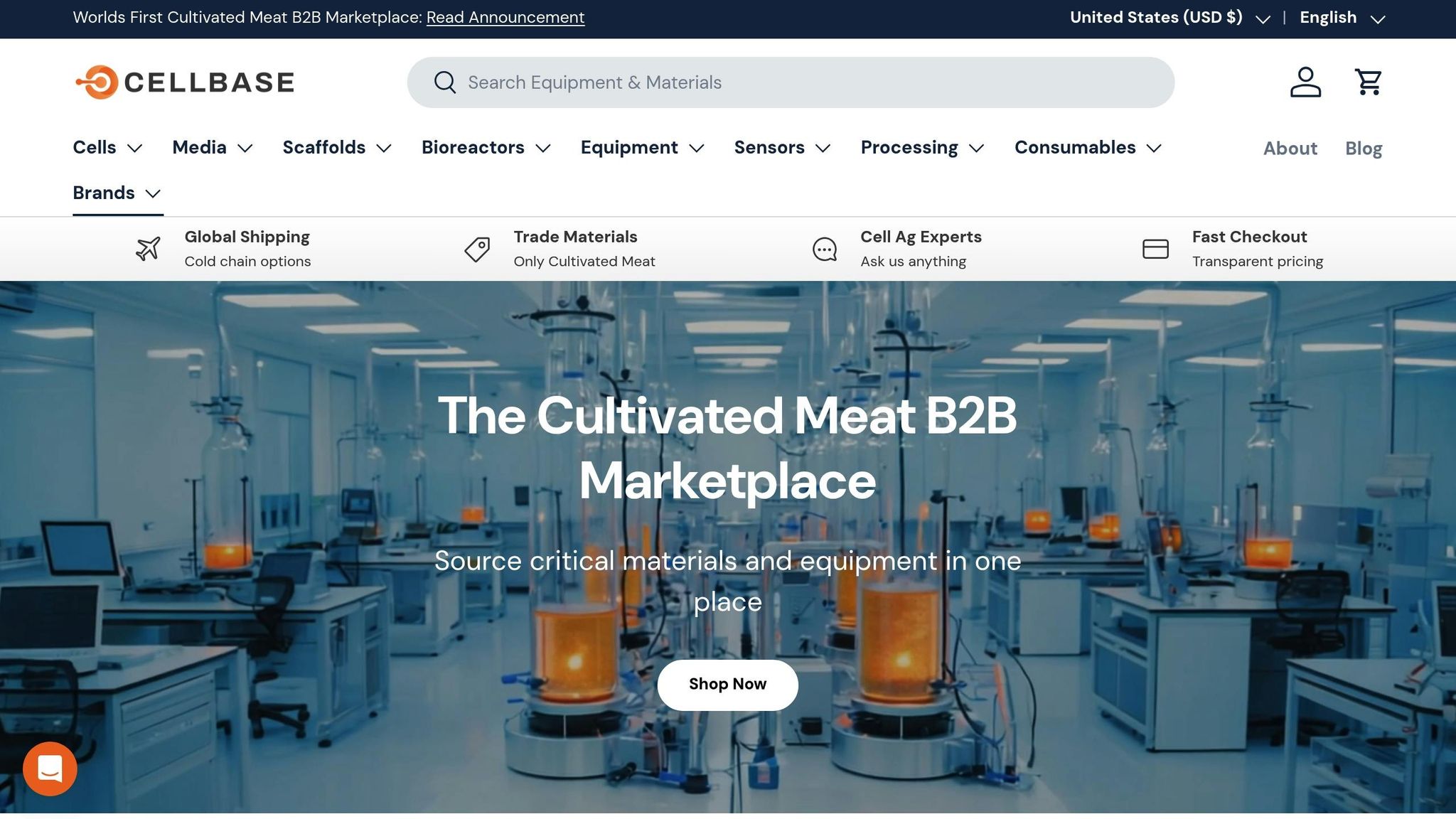
Once formulations are validated, the next step is sourcing reliable components - a process made simpler by platforms like Cellbase.
Cellbase is the first B2B marketplace tailored specifically to the cultivated meat industry. It connects companies with suppliers offering growth media, growth factors, and recombinant proteins, all carefully vetted to meet the technical demands of cultivated meat production.
The platform simplifies procurement with features like transparent pricing and detailed use-case tagging - whether you’re looking for scaffold-compatible, serum-free, or GMP-compliant components. This makes it easier for R&D teams and procurement specialists to find exactly what they need while balancing cost and sustainability.
For companies scaling from research to commercial production, Cellbase provides access to suppliers capable of handling both small experimental batches and larger volumes. Additional features like direct messaging, quote requests, and global shipping with cold chain options ensure that temperature-sensitive items, such as recombinant proteins, arrive in perfect condition.
Beyond sourcing, Cellbase offers valuable market insights, including trends in demand and pricing within the cultivated meat sector. This information helps businesses make smarter procurement decisions and stay ahead of supply chain challenges. In short, Cellbase acts as a one-stop resource for navigating the complexities of serum-free media procurement in the cultivated meat industry.
Conclusion: Advancing Serum-Free Media Development
Creating effective serum-free media for cultivated meat production is all about blending scientific rigour with practical application. Modern approaches rely on tools like Design of Experiments (DOE) and Response Surface Methodology (RSM) to fine-tune multiple variables at once. These methods have delivered impressive results: researchers have reported a 40.72% boost in cell growth by optimising 28 metabolites in chicken fibroblasts, while others achieved 3.5 g/L of recombinant protein by carefully adjusting nutrient concentrations[2][3]. These breakthroughs pave the way for refining media recipes and validation techniques.
The development process follows a consistent framework. It starts with selecting a suitable basal medium - DMEM/F-12 combinations are a common choice as they provide a broad range of nutrients required by most cells. Key additives like insulin, transferrin, and selenium are layered in to support cell growth. From there, nutrient formulations are fine-tuned based on the specific needs of the cell type and species. For example, replacing traditional glutamine with non-ammoniagenic alternatives has been shown to increase adipogenic capacity by 2.1 times, while also eliminating ammonia build-up, which can inhibit growth[2].
Precision is critical during validation. Researchers aim to maintain cell viability above 90%, monitor ammonia levels closely, and ensure consistent results across multiple cell passages. Techniques such as the Plackett-Burman method are used to screen a wide range of variables efficiently, while Box-Behnken designs allow for in-depth optimisation of the most important factors once identified[3][4].
Cost is another major consideration, especially for commercial scale-up. Expensive components need to be optimised to strike the right balance between performance and affordability. As of November 2025, cultivated meat is authorised for sale in just three countries[1], so formulations must also meet strict safety and regulatory standards to enable market expansion.
For sourcing, platforms like Cellbase offer a reliable marketplace for verified components, along with valuable insights into industry trends and pricing. This ensures that formulations remain aligned with both market demands and budget constraints.
FAQs
What are the benefits of using serum-free media instead of foetal bovine serum in cultivated meat production?
Using serum-free media in the production of cultivated meat brings several important benefits compared to foetal bovine serum (FBS). For starters, it addresses ethical concerns tied to FBS while sidestepping the unpredictable nature of its supply chain. This makes serum-free media a more dependable and sustainable choice.
Another advantage is the ability to customise serum-free formulations to deliver the exact nutrients needed for cells to grow, multiply, and differentiate effectively. This tailored approach helps maintain consistent outcomes in production.
What's more, removing animal-based components significantly lowers the risk of contamination and ensures smoother regulatory approval - both essential for scaling up cultivated meat production. These factors position serum-free media as a key step forward in creating cost-efficient and scalable solutions for the cultivated meat industry.
What role do growth factors like FGF2 and insulin play in promoting cell growth and viability in serum-free media?
Growth factors like FGF2 (fibroblast growth factor 2) and insulin play a crucial role in serum-free media by supporting essential cellular activities. FGF2 drives cell proliferation by activating pathways that encourage division and growth, making it indispensable for sustaining healthy cell cultures. Meanwhile, insulin manages glucose uptake and metabolism, ensuring cells have the energy they need to grow and survive.
Together, these components create an environment that replicates the supportive functions of serum, helping cells thrive and differentiate effectively in serum-free conditions. However, their concentrations must be carefully adjusted to suit the specific cell type and the intended application for optimal outcomes.
How can serum-free media be optimised for various species and cell types in cultivated meat production?
Optimising serum-free media for cultivated meat production means fine-tuning its nutrient mix to suit the unique needs of various cell types and species. This involves carefully adjusting levels of essential amino acids, vitamins, and growth factors to encourage cell growth and development. Equally important is maintaining the right balance of lipids, minerals, and carbohydrates to ensure cells remain healthy and function as intended.
Since each species and cell type comes with its own metabolic demands, customisation is often essential. Tools like high-throughput screening and metabolic profiling are invaluable for pinpointing the best formulations. Platforms such as Cellbase, which link professionals with trusted suppliers of growth media components, can make it easier to source the specialised materials needed for these custom blends.


