

Cultivated meat production requires utility systems that blend pharmaceutical-grade precision with food safety standards. Unlike meat processing plants, these facilities rely on bioreactors, demanding sterile conditions, precise temperature control, and high-purity utilities like water, gas, and electricity. Poorly designed systems can ruin batches, delay production, and increase costs. Here's what you need to know:
- Electricity: Reliable power is critical for bioreactors and temperature regulation. Facilities require 300–500 kW on average, with backup systems to avoid disruptions.
- Water: Ultra-pure water is essential for cell growth, with treatment costs varying based on facility size and purity requirements. Recycling can cut water use by 30–50%.
- Cooling: Bioreactors need precise temperature control (±0.5 °C), while finished products require ultra-cold storage (−18 °C or colder). Energy efficiency measures can lower cooling costs by 20–30%.
- Gas Supply: High-purity gases (99.99%) like oxygen and carbon dioxide are vital for cell viability. Systems must ensure sterility and minimise contamination risks and waste.
- Scalability: Modular designs and phased expansions reduce upfront costs and simplify future growth, with single-use systems offering flexibility for early stages.
Facilities can cut costs by adopting energy-efficient systems, recycling water, and using renewable energy. Platforms like Cellbase streamline procurement for specialised components, ensuring compliance with strict regulations. Proper planning and scalable infrastructure are key to thriving in this emerging sector.
UPSIDE Foods' EPIC Engineering, Production, and Innovation Center

Electricity and Power Management Systems
Consistent and reliable electricity is absolutely essential for the smooth operation of cultivated meat facilities. These facilities rely heavily on uninterrupted power to run bioreactors, maintain precise temperatures, and ensure sterile conditions in bioreactors. Unlike traditional meat processing plants, which mainly depend on refrigeration and mechanical systems, cultivated meat production demands a steady and substantial power supply. For instance, a facility operating ten 1,000-litre bioreactors might need 200–300 kW just for bioreactor functions, plus an additional 100–200 kW for temperature regulation. This creates a baseline power demand of 300–500 kW, which must be maintained even during maintenance periods to avoid compromising sterility or temperature control [3].
Power Needs for Bioreactors and Facility Operations
Different types of bioreactors come with their own specific power demands. Stirred-tank bioreactors, the most commonly used in cultivated meat production, require significant energy for their agitation motors. A 100-litre stirred-tank bioreactor typically needs 2–5 kW for agitation alone, with additional power required for aeration, temperature control, and monitoring systems. Altogether, this brings the total power consumption to around 5–10 kW per unit. Scaling up to 1,000-litre bioreactors increases this requirement to approximately 15–30 kW per unit, while larger systems of 6,000 litres can consume anywhere from 50–100 kW each [3].
Air-lift reactors, on the other hand, offer a more energy-efficient solution at larger scales. These systems, often exceeding 20,000 litres, consume 30–40% less power than stirred-tank systems of the same size because they rely on air flows rather than moving parts for mixing [3]. Meanwhile, single-use disposable bioreactors avoid the need for energy-intensive sterilisation cycles, though they still require power to maintain precise environmental conditions.
Power demands peak during cell culture expansion, but baseline loads remain consistently high. To manage these demands effectively, facilities can adopt a tiered electrical distribution system. Primary circuits should prioritise bioreactors and temperature control systems, secondary circuits can handle laboratory and monitoring equipment, and tertiary circuits can support general operations. This structure ensures critical systems remain unaffected by non-essential loads.
Planning ahead is also key. Designing electrical systems with future capacity in mind - typically for 3–5 years of growth - can prevent costly retrofits and disruptions later on. While this might increase initial costs by 15–25%, it’s a worthwhile investment. Features like oversized service entrances, extra breaker slots in distribution panels, and appropriately sized conduits are crucial for accommodating future expansion.
Renewable Energy Integration
Incorporating renewable energy can help offset the high electricity demands of cultivated meat facilities. Solar panels installed on rooftops or nearby land can generate power during daylight hours, while wind turbines might provide additional capacity depending on local conditions. However, relying solely on renewables isn’t practical due to fluctuations in sunlight and wind. A hybrid system that combines renewable energy with grid power and backup systems ensures a steady supply while also reducing costs and improving sustainability.
In areas with abundant renewable resources, facilities could meet 30–50% of their energy needs through renewables. To prepare for growth, renewable systems should allow for future expansion, such as reserving roof space for more solar panels or land for additional wind turbines. Pairing renewable energy with battery storage systems can also help. These systems store surplus energy during low-demand periods and release it during peak times, potentially cutting electricity costs by 15–30%. Even with renewables, robust backup systems remain essential to safeguard operations during power outages.
Backup Power Systems for Sterility
Backup power systems are critical in cultivated meat facilities, as even a brief outage can disrupt sterility and compromise cell cultures. Uninterrupted power supply (UPS) systems are designed to keep essential equipment running during outages. This includes bioreactor agitation systems, temperature controls, monitoring equipment, and systems that maintain sterile environments. Backup systems typically provide 4–8 hours of runtime, allowing staff to either safely shut down operations or transfer cultures until grid power is restored.
Battery banks should be sized to support only critical systems, as powering the entire facility would require an impractically large capacity. Automatic transfer switches ensure a smooth transition from grid power to backup systems, and many facilities use redundant UPS setups to enhance reliability. Regular testing and maintenance under actual load conditions are crucial to ensure these systems function as expected when needed.
Investing in reliable backup power systems safeguards valuable cell cultures and prevents costly production delays, making it an essential aspect of facility planning and design.
Water Systems and Wastewater Management
In cultivated meat facilities, water quality demands are far stricter than those in traditional food manufacturing. Water used in the preparation of growth media must be sterile, free of pyrogens, and carefully regulated for mineral content, pH, and osmolarity to create the ideal environment for cell growth. Unlike conventional meat processing, which primarily uses water for cleaning, cultivated meat production incorporates pharmaceutical-grade water directly into cell culture media. This requires removing endotoxins, bacteria, viruses, and particles to levels akin to those in laboratories and biopharmaceutical settings - a standard that shapes all water management strategies.
Water Quality and Treatment for Bioprocessing
Treating water for cultivated meat production is a more resource-intensive process compared to conventional food processing. The systems must consistently achieve conductivity levels of 5.0–20.0 µS/cm for purified water and keep total organic carbon (TOC) below 500 ppb. Achieving these benchmarks involves multiple treatment stages using advanced technologies.
The process typically starts with pre-filtration (5–20 µm) to remove sediment, followed by activated carbon to eliminate chlorine and organic materials. Reverse osmosis (RO) and electrodeionisation (EDI) then ensure the required conductivity levels. Final polishing is achieved through 0.2 µm microfiltration or sterilising-grade filtration. For the highest purity needs, ultrapure systems with mixed-bed ion exchange or continuous electrodeionisation are employed.
Setting up a complete water treatment system can require a significant investment, depending on the facility size and purity requirements. Ongoing expenses include filter and membrane replacements, along with energy use for day-to-day operation. Monitoring tools like conductivity metres, TOC analysers, and microbial testing are essential for maintaining compliance and ensuring product quality.
Proper storage and distribution are equally critical. Facilities use food-grade stainless steel (316L) tanks with polished interiors to prevent corrosion and biofilm formation. Tanks are typically sized to hold 1–2 days of operational reserve, with separate storage for purified, ultrapure, and recycled water. Distribution systems are constructed with stainless steel piping (304 or 316L grade) featuring smooth interiors and minimal dead legs to avoid stagnant water. To maintain water quality, hot water circulation systems (65–80 °C) are paired with return lines to ensure continuous flow.
Water Recycling and Reuse
Recycling water can significantly cut both consumption and costs in cultivated meat production. A tiered approach is often used, where water is reused based on quality requirements. For example, cooling water from bioreactor heat exchangers can be recycled through cooling towers or heat recovery systems, potentially reducing fresh water use for temperature control by 30–50%.
Water used for cleaning and sanitisation can be partially recycled after secondary filtration and UV sterilisation, though regulatory constraints may limit its use in direct contact with growth media. Steam condensate from sterilisation systems can also be captured and repurposed for less critical applications. Closed-loop systems allow wastewater from media preparation to be treated using membrane bioreactors (MBRs) or reverse osmosis, enabling recovery rates of 60–80%.
Implementing water recycling systems involves an upfront investment, with payback periods typically ranging from 3–5 years. Additional measures, such as rainwater harvesting and greywater systems for cooling tower makeup, can further enhance efficiency. Real-time monitoring with bioprocess sensors helps optimise recycling and quickly identify system issues.
Modular facility designs can also lower overall water use compared to traditional fixed setups. Collaborating with specialised design teams ensures water requirements are tailored to bioprocessing needs, while early involvement of food safety experts helps mitigate contamination risks. Once internal water use is optimised, facilities must also handle effluent discharge in line with strict regulatory standards.
Wastewater Disposal and Regulatory Compliance
Wastewater from cultivated meat facilities in the UK is regulated by frameworks like the Environmental Permitting (England and Wales) Regulations 2016, the Water Resources Act 1991, and local water authority discharge consents. Unlike traditional meat processing, cultivated meat wastewater contains pharmaceutical-grade chemicals, growth media components, and potentially biohazardous substances, all requiring specialised treatment.
Facilities discharging more than 2 m³ of wastewater daily or treating effluent from over 50 population equivalents must secure an Environmental Permit from the Environment Agency. Discharge consents outline specific limits for parameters such as biochemical oxygen demand (BOD), chemical oxygen demand (COD), suspended solids, nitrogen, phosphorus, and pH. These limits are often stricter due to the complex organic materials in growth media.
Wastewater containing genetically modified organisms (GMOs) or potentially hazardous materials must also comply with the Environmental Protection Act 1990 and the Genetically Modified Organisms (Contained Use) Regulations 2014. Pre-treatment systems are mandatory before discharging into municipal sewers or surface waters. Facilities must conduct quarterly monitoring and submit annual reports to the Environment Agency, with penalties for non-compliance determined by the severity of the breach.
Effective wastewater treatment systems are designed to address the unique characteristics of bioprocessing effluent. A typical setup includes primary treatment (screening and grit removal to eliminate solids, followed by equalisation tanks to stabilise pH and flow), secondary treatment (biological processes like activated sludge or membrane bioreactors to remove organic compounds and nutrients), tertiary treatment (sand or ultrafiltration to remove residual solids), and polishing (activated carbon or UV disinfection to eliminate trace organics and pathogens).
Membrane bioreactors are particularly suited to cultivated meat facilities. They offer higher treatment efficiency in smaller spaces, produce high-quality effluent suitable for recycling, and provide superior pathogen removal. Installing a complete treatment system requires substantial capital investment, with ongoing operating expenses for energy, membrane replacements, chemicals, and sludge disposal.
To accommodate future expansion or seasonal variations, systems should be designed with a 20–30% capacity surplus. Continuous monitoring of key parameters ensures compliance and maintains product quality. For specialised equipment and monitoring solutions, companies like Cellbase offer access to verified suppliers with expertise tailored to the needs of cultivated meat production.
Temperature Control and Refrigeration
Managing temperature in cultivated meat facilities is no small feat. It requires a highly controlled environment to support the delicate biological processes involved. Bioreactors must maintain a steady 37 °C, growth media should be stored between 2–8 °C, and finished products need to be kept at −18 °C or colder. This intricate thermal balance ensures the viability of the product while preventing contamination.
The level of precision needed for bioprocessing goes far beyond standard refrigeration. For instance, mammalian cell cultures thrive within a narrow temperature range of 35–37 °C, with tolerances often as tight as ±0.5 °C. Even minor deviations can lead to complete culture loss, which can be devastating financially. Let’s break down the cooling systems for different bioreactor types that keep production running smoothly and the strategies used for storing cultivated meat products.
Cooling Requirements for Bioreactors
Cooling systems for bioreactors are the backbone of cultivated meat production. These systems rely on precise components working together seamlessly. A central chiller unit maintains temperature accuracy within ±0.5 °C, which is crucial for cell growth. Heat exchangers, either built into the bioreactor walls or as external jackets, ensure efficient heat transfer.
To maintain consistency, circulation pumps provide steady flow rates, while redundant temperature sensors and automated controls prevent fluctuations. The materials used, such as stainless steel or pharmaceutical-grade tubing, must meet stringent sterility requirements. Isolation valves allow maintenance without disrupting active cultures.
In-line temperature sensors face rigorous demands, enduring sterilisation cycles and operating for weeks without recalibration. Facilities often use redundant, self-calibrating sensors and dual chiller units to ensure stability, even during equipment failure. Alarms are set to trigger if temperatures deviate beyond ±1 °C, giving operators time to act.
Uninterruptible power supplies (UPS) are essential for critical systems, offering 4–8 hours of backup power. Facilities also rely on backup generators, which are tested monthly to ensure they can handle the full cooling load during emergencies.
Refrigeration for Storage and Preservation
Storage needs in cultivated meat facilities vary, requiring a tiered refrigeration approach. Growth media is stored at 2–8 °C in dedicated coolers, while harvested cells often require ultra-low freezers at −80 °C or liquid nitrogen storage at −196 °C for long-term preservation. Finished products are kept at −18 °C or lower.
Commercial-grade refrigeration is a must - household appliances simply won’t cut it. Facilities often use modular refrigeration systems, which share compressors but have separate evaporators for each temperature zone. This setup improves energy efficiency by balancing the load across systems. Cascade refrigeration systems, which use a single compressor to handle multiple temperature levels, are another way to enhance efficiency.
Emergency cooling options, like portable liquid nitrogen systems or dry ice, provide extra protection against equipment failures. Automated data logging systems continuously record temperatures, creating an audit trail for regulatory compliance. Facilities also establish clear protocols for handling temperature excursions, ensuring swift action during system failures. Regular maintenance, such as quarterly chiller checks and monthly backup system tests, is critical to meeting food safety standards.
Reducing Energy Use in Temperature Control
Cooling systems account for 30–40% of operating costs in cultivated meat facilities, so improving energy efficiency can make a big difference. Heat recovery systems, for example, capture waste heat from compressors to preheat water or support facility heating, cutting energy use by 15–25%. High-performance insulation in cooler walls, with a minimum R-value of 30–40, can reduce heat infiltration and lower cooling loads by 20–30%.
Variable-frequency drives (VFDs) on pumps and compressors allow systems to adjust output during low-demand periods, improving efficiency by 10–20%. Demand-controlled ventilation in cooler rooms, which adjusts air exchange rates based on actual needs, can save another 15–20%. Scheduling operations during off-peak electricity hours (22:00–06:00 in the UK) and pre-cooling facilities at night can reduce electricity costs by 20–30%.
High-efficiency compressors, which are 15–25% more efficient than standard models, along with routine maintenance, help systems run at peak performance. Maintenance tasks include cleaning condenser coils, checking refrigerant levels, and inspecting seals.
A mid-sized cultivated meat facility that adopts these energy-saving measures could significantly reduce annual cooling costs, with payback periods of just 3–5 years for the necessary investments.
To prepare for future growth, facilities should oversize main utilities like electrical feeds and water lines by 30–50%, making it easier to add bioreactors or storage capacity later. Proper layout planning, such as placing chillers close to bioreactors to minimise piping distances, reduces heat loss and pressure drops. Insulating pipes further ensures precise temperature control, which is vital for cultivated meat production.
For specialised equipment, suppliers like Cellbase offer tailored solutions, including heat exchangers and continuous monitoring systems that prioritise process safety and product quality[2][4].
sbb-itb-ffee270
Gas Supply and Delivery Systems
Gas supply systems are a cornerstone of cultivated meat production. Three key gases play a vital role in keeping bioprocessing operations on track: carbon dioxide (CO₂), which helps maintain pH balance and regulates osmotic pressure; oxygen (O₂), essential for aerobic cell respiration and energy production; and nitrogen (N₂), used as an inert gas to purge systems and maintain pressure. Without precise control over these gases, cell viability can be severely impacted, potentially halting production.
Delivering these gases at pharmaceutical-grade purity while maintaining sterility is non-negotiable. Even trace contaminants - like particulates, moisture, or hydrocarbons - can compromise cell cultures and pose food safety risks. As a result, gas handling protocols in cultivated meat facilities are as stringent as those found in pharmaceutical production, with meticulous attention paid to system design and operation.
Gas Purity and Delivery System Design
In cultivated meat bioprocessing, achieving pharmaceutical-grade gas purity is a top priority. Gases typically need to reach 99.99% purity or higher, far exceeding the requirements of standard industrial applications. For compressed air used in direct product contact, filtration must be capable of removing particles as small as 0.3 microns to ensure sterility [5]. Delivery systems are designed not only for efficient aeration but also to maintain the highest levels of cleanliness.
Key elements of these systems include sterile filters at gas entry points, which trap particulates and microorganisms before gases enter bioreactors. Piping is strategically designed for easy cleaning and maintenance, with all gas-contact surfaces typically made from 316 stainless steel to resist corrosion and prevent contamination.
Precision is achieved with mass flow controllers, which regulate aeration within ±2%, and pressure regulators, which stabilise outlet pressure within ±5%, even as inlet pressures and flow rates vary. Safety features like pressure relief valves and backpressure regulators ensure optimal conditions without creating turbulence that could harm cell cultures.
As production scales up, gas delivery systems become more complex. For example, air-lift reactors are often preferred for volumes exceeding 20,000 litres because they mix contents without moving parts, reducing shear stress and power demands. Meanwhile, single-use bioreactor systems, widely used in cell therapy and biopharmaceuticals for volumes up to 6,000 litres, inform gas delivery strategies in cultivated meat production [3].
Safety and Compliance in Gas Handling
Handling gases in cultivated meat facilities involves strict adherence to health, safety, and food standards. Compressed gas cylinders must be stored in designated, well-ventilated areas, kept away from heat sources and incompatible materials, and secured to prevent tipping or damage. Beyond storage, facilities rely on pressure relief systems, emergency shut-off valves, and automated monitoring to detect leaks or pressure irregularities. Comprehensive staff training on safe handling, emergency response, and equipment operation is essential.
Traceability is another critical aspect. Facilities must maintain detailed records of gas sourcing, purity certifications, and usage logs. Suppliers provide certificates of analysis (CoA) for each gas delivery, which document purity levels and testing methods - key components of HACCP (Hazard Analysis and Critical Control Points) plans. For steam supply systems, boiler treatment chemicals must be approved for use on surfaces that come into direct contact with products [5]. Real-time monitoring systems detect any deviations in gas purity, while regular safety audits and equipment checks form the backbone of a reliable gas handling programme.
Reducing Gas Supply Costs
Gas supply represents a significant expense in cultivated meat production, but there are strategies to manage costs without compromising quality. One effective approach is gas recycling, where unused CO₂ and N₂ are captured and purified for reuse. While this requires an upfront investment in equipment, it can lead to substantial savings over time. Long-term supply contracts with verified gas suppliers also help reduce costs by providing volume discounts and price stability.
Precise gas flow control systems are another way to minimise waste, eliminating losses from over-delivery or leaks. For facilities seeking greater independence, on-site gas generation systems, such as nitrogen generators or oxygen concentrators, offer an alternative to relying on external suppliers. However, these systems should be carefully evaluated for their capital costs and long-term savings potential.
Optimising bioreactor design can also cut gas usage. Adjusting sparger designs, fine-tuning agitation rates, and implementing advanced control systems that align gas delivery with real-time cellular demand are all effective measures. These adjustments not only lower operational costs but also reduce environmental impact. Energy-efficient features, like variable frequency drives (VFDs) on gas compressors, allow equipment to operate at reduced capacity during periods of lower demand. Additionally, heat recovery systems can capture waste heat from gas compression processes and use it for facility or water heating. Thoughtful piping design - minimising lengths, reducing bends, and using appropriately sized conduits - further reduces energy consumption by minimising pressure drops [1].
Collaborative efforts can also drive savings. Regional partnerships with other cultivated meat producers or food manufacturers allow facilities to negotiate better pricing through collective purchasing agreements. Platforms like Cellbase connect procurement teams with verified suppliers offering competitive pricing on specialised equipment and materials, helping facilities identify cost-effective solutions tailored to their needs.
Finally, modular gas supply designs ensure scalability. By oversizing main gas distribution lines and utility infrastructure during initial construction, facilities can accommodate future production increases without the need for costly retrofits. A tiered design approach, which starts with systems sized for current needs but includes connection points for easy expansion, ensures long-term reliability and cost efficiency as production grows.
Modular and Scalable Utility Design
As the cultivated meat industry grows, companies are navigating the challenge of scaling production while managing financial risk. Rigid infrastructure from the start can be a costly gamble. Instead, a modular utility design offers a more adaptable solution, allowing facilities to begin on a smaller scale, validate their processes, and expand step by step as production and revenue increase.
Unlike traditional meat processing plants, which demand heavy upfront investment in fixed infrastructure, modular systems are built as separate, interconnected units. Whether it's a power distribution panel, a water treatment system, or a cooling loop, each module can function independently while integrating smoothly with others. This setup not only reduces initial costs but also provides the flexibility to adapt and grow as bioprocessing technology advances. Essentially, modular designs allow cultivated meat producers to minimise risk early on while laying the groundwork for efficient, scalable growth.
Phased Expansion of Utility Systems
Phased expansion involves building utility systems in stages, aligning with production milestones rather than investing in full-scale systems from the outset. For example, cultivated meat facilities might start with small bioreactors (10–100 litres) during research and development, scale up to pilot systems (500–2,000 litres), and eventually reach production capacities of 5,000–20,000 litres or more.
Electrical systems can be designed to grow alongside production. By installing oversized conduits and cable trays during initial construction, facilities can add circuits later without major reconstruction. Similarly, water systems can benefit from a modular approach. Instead of one large reverse osmosis unit, multiple smaller units can be installed in parallel, with pre-marked connection points for seamless upgrades. Wastewater treatment systems can also be expanded modularly, with independent stages for biological or chemical processing.
Cooling systems, often a significant expense, are another area where modular design shines. Using several smaller chiller units in parallel ensures continuous operation, easier maintenance, and the ability to add capacity incrementally. Oversized main headers with provisions for extra chiller connections further reduce costs and disruptions during expansions.
Gas supply systems should also be designed for scalability, with modular lines and independent regulators. Storage systems - whether for liquid gas tanks or cylinders - should be sized with future needs in mind.
The choice between reusable and single-use systems plays a significant role in utility demands. Single-use systems lower initial infrastructure costs by 50–66 per cent compared to reusable systems, as they eliminate the need for extensive cleaning-in-place (CIP) and sterilisation-in-place (SIP) setups. However, reusable systems become more cost-effective at larger scales, despite higher initial investment in water treatment, steam generation, and chemical supply infrastructure. Single-use bioreactors, available in volumes up to 6,000 litres, simplify operations by reducing turnaround times, minimising cross-contamination risks, and cutting water and energy use.
In November 2025, Cellbase published an analysis comparing these systems, showing how each impacts utility infrastructure. Single-use systems simplify water and steam requirements but increase waste management needs, while reusable systems require more extensive fixed utilities but offer lower operating costs over time. For facilities planning phased expansion, single-use systems may be ideal for pilot and early commercial stages, with reusable systems becoming more practical as production scales. Aligning bioprocessing system choices with modular utility design enables a balance between flexibility and cost-efficiency.
Another strategy, known as scaling-out, involves deploying multiple smaller bioreactor lines in parallel rather than relying on a single large reactor. Economic models suggest that comparing continuous vs fed-batch bioprocessing shows that staggered harvesting across multiple bioreactors can save up to 55 per cent on capital and operating expenses over a decade compared to batch processing. This approach simplifies utility planning, as each bioreactor line has predictable demands. Water systems can expand with additional treatment modules, and cooling needs can be met by adding 100–200-kilowatt chiller units as production grows.
Designing Utility Infrastructure for Future Growth
To prepare for future growth, utility infrastructure must be designed with tomorrow's demands in mind. This means planning for increased production volumes, technological advancements, and process improvements.
During initial construction, oversize main distribution components - such as headers, conduits, and piping - to accommodate future expansion. While individual utility units (like chillers or water treatment modules) can be sized for current needs, the connecting infrastructure should include extra capacity with pre-installed valves and connection points for future upgrades. The additional upfront cost is minimal compared to the expense of retrofitting later.
High-throughput miniature bioreactors can also help optimise processes before committing to large investments. The Cultivated Meat Modelling Consortium, formed in 2019, uses computational modelling to refine bioprocesses, reducing the need for costly physical scale-up trials. By validating utility requirements on a smaller scale, facilities can build infrastructure with greater confidence and avoid over-investing.
At scales above 20,000 litres, air-lift reactors become advantageous due to their simpler mixing requirements, lower shear stress, and reduced power needs. Facilities planning for such scales should design gas delivery systems capable of supporting air-lift configurations, even if initial production uses stirred-tank bioreactors. Oversized gas compressors, distribution manifolds, and pressure control systems can be incorporated early to accommodate future needs.
Redundancy is another key consideration. As production scales, utility failures can have severe consequences. Backup cooling systems should be sized to maintain sterility and product viability during outages, with the capacity to expand as production grows. Similarly, backup power systems - whether diesel generators, battery storage, or renewable energy installations - should be designed with room for future upgrades.
Engaging with facility design specialists early can ensure utility systems are scalable without requiring major retrofits later. For instance, Endress+Hauser has reported reducing engineering costs and timelines by 30 per cent through scalability expertise and tailored analysis. Similarly, the Dennis Group specialises in designing meat processing facilities with automation and expansion in mind.
Procurement strategies also play a role in scalability. Platforms like Cellbase connect teams with verified suppliers offering modular components specifically for cultivated meat production. By prioritising suppliers with standardised interfaces and connection points, producers can streamline future expansions as their needs evolve.
Cost Reduction and Procurement Strategies
Running utility systems in cultivated meat facilities comes with hefty capital and operational demands. Essential components like bioreactor cooling systems, compressed gas delivery, water treatment, and backup power require substantial upfront investment and ongoing costs. To manage these effectively, careful planning and smart procurement strategies are essential.
For early-stage companies, this balancing act is even trickier. Building full-scale utility infrastructure before validating production processes can exhaust resources and delay profitability. On the flip side, underinvesting in utilities can lead to inefficiencies and expensive retrofits later. The key is aligning infrastructure investments with production milestones to ensure both cost control and scalability.
Reducing Capital and Operating Costs
One of the biggest decisions affecting utility costs is whether to use single-use or reusable bioprocessing systems. Single-use systems significantly lower initial costs by eliminating the need for cleaning-in-place (CIP) and sterilisation-in-place (SIP) systems. However, reusable systems, despite their higher upfront cost, can reduce long-term consumable expenses and minimise waste. For large-scale operations, evaluating the total cost over time is essential.
Continuous operations further help manage utility demand efficiently, especially when combined with modular design. By maintaining steady-state conditions, utility systems can be designed to meet consistent demand rather than oversized for peak loads. Running multiple bioreactor lines in parallel and staggering harvest times also smooths utility usage, improving overall efficiency.
Energy efficiency measures play a crucial role in cutting operational costs. For instance, refrigeration units that adjust capacity based on demand can significantly lower energy consumption. Heat recovery systems are another smart option, redirecting waste heat for uses like water heating or space conditioning. Water recycling systems, using technologies like filtration, reverse osmosis, and ultraviolet sterilisation, can recover 80–90% of process water. This recycled water is perfect for tasks like cleaning, while high-purity water is reserved for bioprocessing. Typically, the investment in such systems pays for itself within three to five years.
Adding renewable energy sources, such as solar panels or wind turbines with battery storage, can also reduce reliance on grid electricity and protect against energy price fluctuations. These systems can even double as backup power during outages, ensuring uninterrupted operations.
Engaging specialists early can uncover additional cost-saving opportunities. Specialised engineering firms have reported that involving experts can reduce both project timelines and engineering costs by as much as 30%. Tools like high-throughput miniature bioreactors and computational modelling allow facilities to test and refine utility system parameters on a smaller scale before committing to large-scale investments. Initiatives like the Cultivated Meat Modelling Consortium encourage collaboration across the industry, advancing research and development while avoiding unnecessary spending. These approaches tie directly into scalable utility design principles and help facilities access suppliers capable of meeting complex technical requirements.
Finding Suppliers through Cellbase
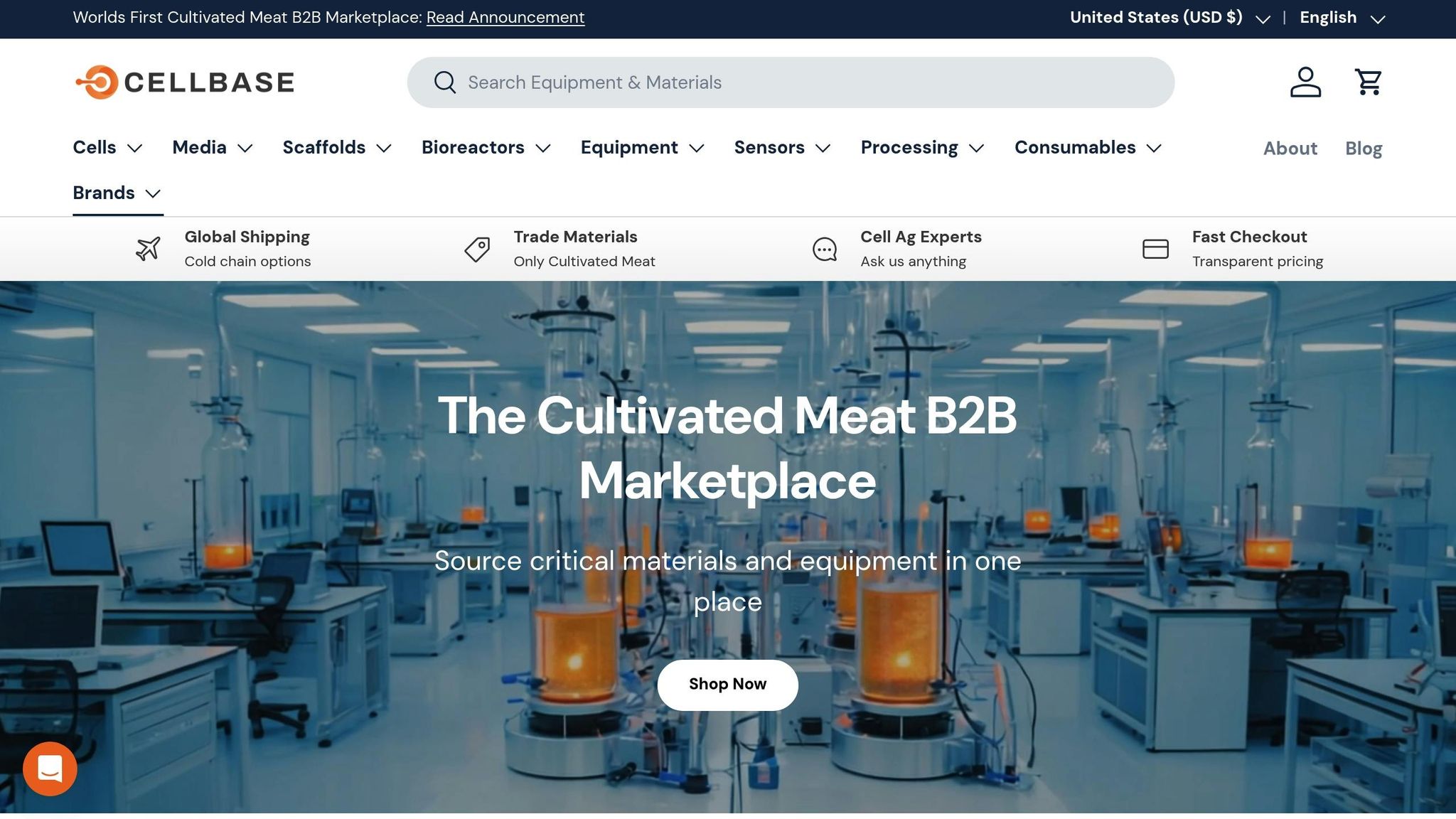
Strategic procurement is just as important as smart design when it comes to controlling costs. Sourcing the right utility components is critical, but general industrial supply platforms often fall short when it comes to the specific needs of cultivated meat production. This can make procurement a slow and frustrating process.
Enter Cellbase - a B2B marketplace tailored specifically for the cultivated meat industry. This platform connects facility operators with verified suppliers of essential infrastructure components and consumables, such as gases, water treatment chemicals, and sensor calibration standards. With curated listings featuring detailed technical specs and use-case tags (like "scaffold-compatible" or "GMP-compliant"), Cellbase simplifies sourcing. Transparent pricing and the ability to compare options or request quotes make it easier for procurement teams to make informed decisions.
On top of that, Cellbase offers insights and cost analyses, such as comparisons between single-use and reusable bioreactor systems. This helps facilities weigh upfront investments against long-term operational costs. By engaging with multiple verified suppliers through the platform, operators can optimise their total cost of ownership while ensuring components meet the stringent requirements of bioprocessing.
Conclusion
Producing cultivated meat comes with unique challenges, especially when compared to traditional meat processing. Facilities must operate in pharmaceutical-grade environments, where utilities play a critical role. For instance, bioreactors need to maintain a constant 37 °C, water treatment systems must supply ultra-pure water that meets USP standards, and gas delivery systems require a purity of 99.99% or higher. Even a brief utility failure can jeopardise cell viability and contaminate entire batches.
To meet these demands, utility systems must be designed as an integrated whole. Power, water, and gas systems are interconnected, working together to maintain the precise conditions necessary for cell culture. A failure in one area can have a ripple effect, disrupting the entire operation.
Phased expansion and modular designs offer a practical solution, allowing producers to scale production while managing costs. Over a decade, these approaches can reduce capital and operational expenses by up to 55% [3]. By minimising downtime, reducing energy-intensive sterilisation cycles (often requiring temperatures of 121 °C or higher), and improving equipment utilisation, facilities can achieve significant savings.
The choice between single-use and reusable systems is another key consideration. This decision influences utility design at every level, from initial costs to energy use and long-term operating expenses. It also affects how water is consumed and the backup power capacity required.
Regulatory compliance and food safety must be central to utility design from the start. Conducting a biosafety risk assessment and HACCP planning should guide decisions on critical aspects like water quality monitoring, gas purity checks, and temperature stability. Continuous documentation of utility parameters is essential, creating audit trails that meet the evolving regulatory standards in different markets. Engaging with regulatory bodies early in the design process ensures systems are not only compliant with current regulations but also flexible enough to adapt to future changes.
Advanced sensor technology further supports bioprocess integrity. Real-time monitoring optimises feeding, detects contamination early, and ensures consistent product quality [2][3]. Self-calibrating temperature sensors, for instance, reduce risks by automating traceable monitoring and eliminating errors. Investing in reliable sensors can significantly reduce batch failures and improve overall efficiency.
Finally, strategic procurement plays a crucial role in balancing costs and reliability. Platforms like Cellbase simplify access to verified suppliers, helping producers source utility components efficiently. This streamlined approach not only controls costs but also supports scalable production through cost-effective utility design.
FAQs
How can renewable energy be integrated into cultivated meat facilities, and what impact does it have on energy costs?
Integrating renewable energy into cultivated meat facilities means powering operations with sources like solar, wind, or biomass. This shift can cut down reliance on traditional power grids, helping to decrease carbon emissions and support sustainability efforts.
Beyond environmental benefits, renewable energy offers financial advantages. It can lower long-term energy costs by reducing dependence on unpredictable utility prices. While the upfront investment might be higher, government grants and subsidies can help offset these expenses, making it a smart and eco-conscious choice for cultivated meat production.
What impact does choosing between single-use and reusable bioprocessing systems have on utility requirements and operational costs in cultivated meat production?
The decision between single-use and reusable bioprocessing systems plays a key role in shaping utility needs and operational costs in cultivated meat production.
Single-use systems often use less water and energy since they don’t require extensive cleaning or sterilisation. This can help cut immediate utility expenses. However, they tend to produce more waste and may lead to higher material costs over time, particularly in large-scale operations.
On the other hand, reusable systems require significant amounts of water, electricity, and sometimes gas for cleaning and sterilisation. While this increases utility usage, these systems can prove more economical in the long run for facilities with high production volumes. Ultimately, the choice hinges on factors like production scale, budget limitations, and sustainability priorities.
What are the key steps to ensure wastewater management in cultivated meat facilities complies with regulations?
Meeting regulatory requirements in wastewater management is crucial for cultivated meat facilities. This means understanding and following both local and national environmental regulations. A good starting point is to analyse the wastewater thoroughly to pinpoint any contaminants. From there, facilities can adopt suitable treatment methods, such as filtration or chemical neutralisation, to address these issues effectively.
Keeping detailed records of wastewater discharge - covering both volume and quality - is another essential step. These records not only demonstrate compliance but also help monitor system performance over time.
It’s also important to stay informed about changing regulations. Working with environmental consultants or maintaining communication with local authorities can provide valuable guidance. Well-planned wastewater systems do more than just tick regulatory boxes - they support long-term, sustainable practices and help reduce environmental harm.


