

Cultivated meat production has immense potential but faces critical energy challenges. From high energy demands in bioreactors to maintaining cold storage during distribution, these hurdles could undermine its benefits. To make cultivated meat viable, the industry must address energy efficiency and shift towards renewable energy sources.
Key points:
- Bioreactors: Maintaining sterile, controlled conditions requires significant energy. This involves selecting sensors for cultivated meat bioreactors that monitor temperature and pH without excessive power draw. Growth media and large-scale operations further increase consumption.
- Cold Storage: Refrigeration systems consume 40–70% of facility electricity. Inefficiencies, such as underutilised storage, worsen the problem.
- Renewable Energy: On-site solar and wind systems, along with Power Purchase Agreements (PPAs), can drastically cut emissions.
- Procurement Issues: Using generic equipment increases energy use. Specialist platforms like Cellbase offer tailored, energy-efficient solutions.
- Scaling Up: Large bioreactors introduce energy-intensive challenges like managing CO₂ levels and optimising mixing.
Solutions include improving bioreactor efficiency, adopting smart cold chain logistics, and sourcing renewable energy. Addressing these issues is key to reducing emissions and making cultivated meat a viable option for feeding a growing population.
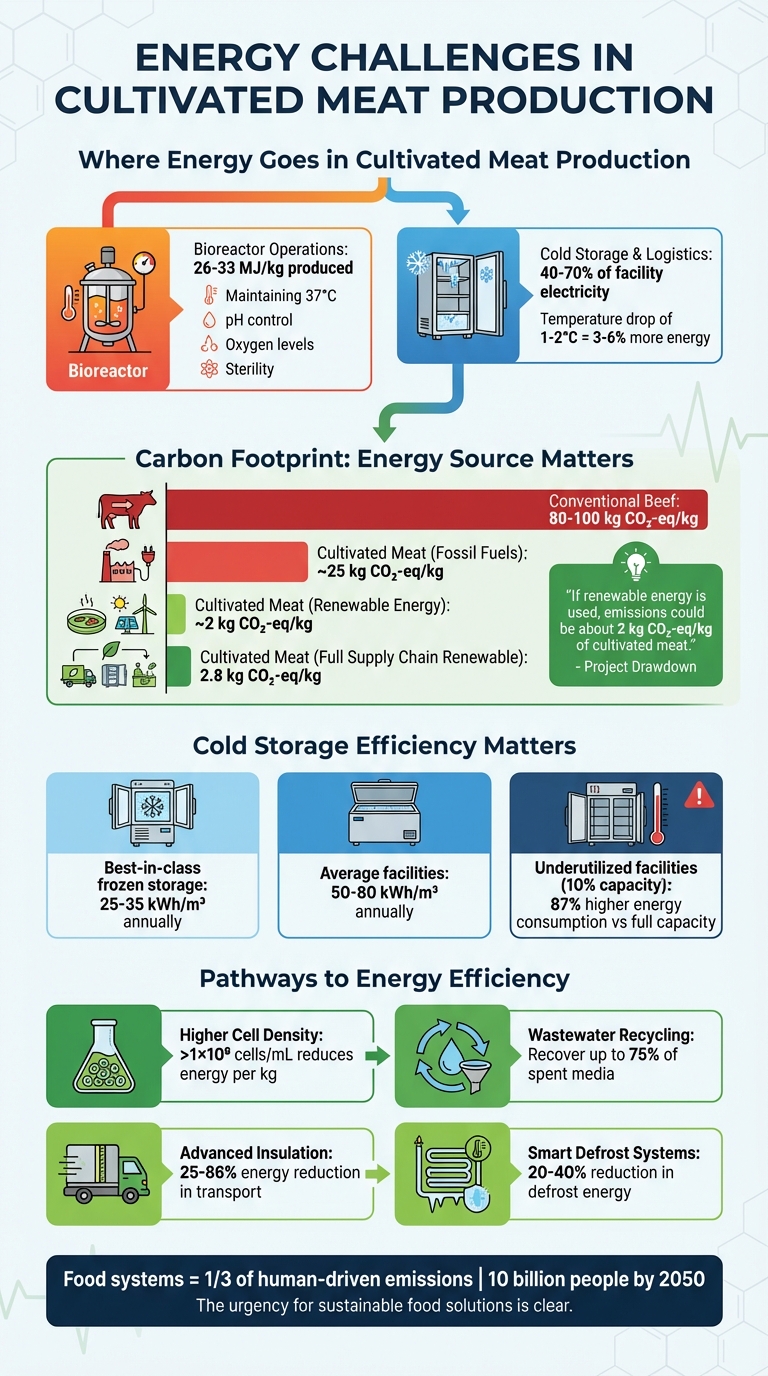
Energy Consumption and Emissions in Cultivated Meat Production vs Conventional Beef
Energy Requirements in Cultivated Meat Production
Energy Consumption in Bioreactor Operations
Bioreactors are at the heart of cultivated meat production, but they come with a hefty energy bill. Maintaining ideal conditions - around 37°C, controlled pH levels, and precise oxygen concentrations - requires a constant energy supply. On top of that, the process demands strict pharmaceutical-grade sterility to prevent contamination and viral risks, which further ramps up energy use.
These energy demands are especially pronounced in large-scale bioreactors, such as stirred-tank and airlift systems, which range from 41,000 to 262,000 litres in capacity. According to an early life cycle assessment, producing cultivated meat can consume between 26 and 33 megajoules of energy per kilogram produced [1].
"The environmental impact of near-term ACBM production has the potential to be significantly higher than beef if a highly refined growth medium is utilised... This study highlights the need to develop a sustainable animal cell growth medium that is optimised for high-density animal cell proliferation."
– Derrick Risner et al., University of California, Davis [1]
A major contributor to this energy load is the growth medium. Pharmaceutical-grade media components require extensive purification, which dramatically inflates the energy footprint. The type of bioreactor operation also plays a role. For example, continuous and fed-batch systems have different energy profiles, with perfusion bioreactors requiring constant media exchange. To make cultivated meat more energy-efficient, optimising these processes is essential.
Improving Energy Efficiency in Production
Improving energy efficiency in bioreactor operations can significantly lower costs and ease the logistical challenges of cultivated meat production.
One key factor is achieving higher cell densities. Concentrations above 1 × 10⁸ cells per millilitre help reduce the energy required per kilogram of product. Higher densities mean fewer bioreactor runs and less media to heat, stir, and process.
Switching from pharmaceutical-grade to food- or feed-grade media components is another way to cut energy use. Pharmaceutical-grade media undergoes intense purification, which inflates the carbon footprint. Developing cell lines that can tolerate higher waste levels would allow for greater cell density and lower media turnover, reducing the overall energy demand.
Advanced bioreactor designs can also play a role. Incorporating wastewater recycling systems capable of recovering up to 75% of spent media and water [1] can significantly reduce the energy needed for raw material processing and waste management. These innovations are crucial for making cultivated meat production more energy-efficient and sustainable in the long run.
sbb-itb-ffee270
Cold Chain Logistics: Energy for Temperature Control
Temperature Control Requirements in Supply Chains
Once cultivated meat exits the bioreactor, keeping it at the right temperature during storage and transport becomes a significant energy challenge. Refrigeration systems in cold stores, meat plants, and frozen food facilities typically consume between 40–70% of their total electricity usage [3].
This energy demand comes from three main areas: heat transfer through walls, doors, and ceilings (which accounts for 10–25% of the load); warm air entering during door openings; and the initial cooling or freezing of the product [3]. These issues become even more pronounced when facilities are underutilised.
The energy used is heavily influenced by temperature settings. For example, lowering the temperature by just 1–2°C beyond safety requirements can increase energy consumption by 3–6% [3]. Similarly, switching from chilled storage (4°C) to deep-frozen (-20°C) more than doubles the energy demands of the facility [4].
Storage inefficiencies also play a role. When facilities operate at only 10% capacity instead of full utilisation, specific energy consumption can rise by 87% [4]. This happens because fixed thermal losses remain constant, but there’s less product mass to absorb the cooling. For cultivated meat companies, which often face fluctuating production volumes, this creates a tough balancing act. Managing temperature control effectively is critical to ensuring energy-efficient distribution.
Solutions for Cold Chain Energy Efficiency
Considering the high energy demands of temperature control, several practical measures can help improve efficiency in cold chain logistics.
- Reducing infiltration losses: Installing rapid-roll doors and air curtains can significantly minimise energy waste caused by warm air entering during door openings. For example, a poultry plant in Northern Spain invested €1.4 million in 2023 to upgrade its systems, cutting electricity use by 26% (equivalent to 2.1 GWh annually) with a payback period of 4.8 years [3].
- Advanced insulation: Technologies like vacuum-insulation panels and phase-change materials can lower energy use by 25–86% across different transport modes [5]. These solutions stabilise temperatures during transit, reducing the workload on refrigeration systems and preventing quality loss during temperature shifts.
- Smart defrost systems: Real-time IoT monitoring, combined with demand-based defrost technology, can reduce defrost energy consumption by 20–40%. These systems also help identify inefficiencies quickly [3]. Integrating these with advanced data systems allows for continuous monitoring and long-term energy optimization.
For facilities aiming to improve their performance, best-in-class frozen storage typically operates at 25–35 kWh/m³ annually, while average facilities consume 50–80 kWh/m³ [3]. Bridging this gap requires a mix of better insulation, improved storage utilisation, and process sensors for refrigeration control.
Using Renewable Energy in Logistics
Installing On-Site Renewable Energy Systems
Switching focus from improving energy efficiency to rethinking energy sources can significantly cut the carbon footprint of cultivated meat production.
The choice of energy source plays a huge role in the environmental impact of cultivated meat. For example, using renewable energy can slash emissions to around 2 kg CO₂-eq per kilogramme of meat - a stark contrast to the 80–100 kg CO₂-eq per kilogramme for conventional beef. On the other hand, relying on fossil fuels bumps emissions up to roughly 25 kg CO₂-eq per kilogramme [6].
"If renewable energy is used, emissions could be about 2 kg CO₂‑eq/kg of cultivated meat." – Project Drawdown [6]
On-site solutions like solar panels and wind turbines can help decarbonise operations directly. However, these energy sources come with challenges, particularly their variable output, which can disrupt facilities requiring constant power. Modular facility designs offer a clever workaround. Instead of depending on one large bioreactor, companies can use several smaller units to match energy demand with the availability of renewable power. A great example of this approach is Paris-based Gourmey. In May 2025, they installed six 5,000-litre bioreactors in their €35 million facility, achieving 90% of the scale effect while keeping operational complexity and risks in check. Their setup is designed to produce cultivated meat at a cost below €10/kg [7]. Advanced solar technologies, like bifacial panels that capture sunlight on both sides, can also boost on-site power generation [6].
Still, the unpredictable nature of on-site renewables means facilities often need backup from grid solutions to maintain reliability.
Grid Decarbonisation and Power Purchase Agreements
To complement on-site systems, securing renewable energy from the grid is essential for seamless operations.
While on-site renewables provide a solid foundation, most facilities still rely on grid electricity to ensure uninterrupted power. Power Purchase Agreements (PPAs) are a practical way to secure clean, renewable energy from the grid. These long-term contracts not only provide stable energy supplies but also protect against fluctuating energy prices [6]. By sourcing renewable energy for their facilities, cultivated meat producers can reduce their carbon footprint by about 70%. Extending renewable energy use across the entire supply chain could lower emissions to as little as 2.8 kg CO₂-eq per kilogramme [8].
"Just as electric cars are cleaner when electricity is sourced from greener energy grids, cultivated meat is most sustainably produced with renewable energy." – Elliot Swartz, PhD, Senior Principal Scientist, GFI [8]
Focusing on renewable energy for on-site operations (Scope 1 and 2 emissions) should be the top priority, as it delivers immediate reductions in emissions. When negotiating PPAs, it’s crucial to consider future grid decarbonisation trends to ensure contracts align with long-term environmental goals [10]. Additionally, collaborating with media suppliers to ensure renewable energy is used for input production can amplify the positive impact across the supply chain [10].
Improving Procurement to Reduce Energy Waste
Problems in Cultivated Meat Equipment Sourcing
Finding the right equipment for cultivated meat production can be a bigger challenge than many realise, and it often has a direct impact on energy consumption. General-purpose lab supply platforms just don’t meet the specific needs of cultivated meat producers. This mismatch can lead to companies using equipment that isn’t designed for their processes - like bioreactors that aren’t suitable for continuous cell culture or sensors that lack precision. The result? A lot of wasted energy. For example, generic bioreactors and stirring systems may require 20–50% more energy for cooling, aeration, and mixing, simply because their design doesn’t align with the requirements of maintaining 37°C cultures [11][12][13].
The problem doesn’t stop there. Fragmented supplier networks make things worse by causing delays and pushing companies to settle for less efficient, energy-draining alternatives. Take cold chain logistics, for instance: using generic sensors can lead to overcooling, which wastes 10–15% of the total energy used in logistics [12][13]. Altogether, inefficient sourcing not only increases energy consumption but also hinders the potential to cut emissions by as much as 92% when optimised systems are used [11][13].
Specialist Platforms for Energy-Efficient Procurement
To tackle these challenges, companies need smarter procurement solutions that prioritise energy efficiency at every stage of production. Specialist platforms have started to fill this gap by connecting businesses with suppliers who truly understand the unique demands of cultivated meat production. One standout example is Cellbase, the first dedicated B2B marketplace for the cultivated meat industry. This platform bridges the gap between buyers and suppliers, offering a curated selection of energy-efficient equipment like bioreactors, sensors, and scaffolds. With transparent pricing and industry-specific expertise, Cellbase helps companies make informed decisions that align with their energy-saving goals. This kind of targeted procurement is a crucial step in reducing energy waste across the entire production process.
Scaling Production: Energy Considerations
Energy Costs at Commercial Scale
As cultivated meat production moves from pilot projects to full-scale commercial operations, energy efficiency becomes a key focus in meeting sustainability targets. Scaling up production significantly increases energy demands, especially with the use of large stirred tank bioreactors that have capacities exceeding 20,000 litres [14]. The main challenge lies in maintaining optimal growth conditions as the scale increases.
One major energy-intensive task involves managing dissolved CO₂ (dCO₂) levels in these large bioreactors. In commercial stainless-steel fermentors, hydrostatic pressures above 1.0 bar can cause dCO₂ concentrations to rise dramatically, often reaching levels between 75 and 225 mg/L. To put this into perspective, dissolved oxygen levels typically remain below 8.0 mg/L [2]. High dCO₂ levels not only consume more energy but also hinder cell growth and reduce product quality. Research on CHO cells has shown that insufficient control of pCO₂ and pH can limit growth rates to just 35–45% of their maximum potential [2].
The transition to food-grade aseptic conditions introduces additional challenges. Muhammad Arshad Chaudhry, a biomanufacturing consultant, highlights the importance of addressing these issues:
"In large-scale bioreactors, [high pCO₂] levels can result from high pressures and poor mixing conditions. Hence, thorough scale-up studies should analyse the influence of pCO₂ to ensure comparable performance between large and laboratory scales" [2].
Overcoming these energy-related hurdles requires advanced bioreactor designs and careful process adjustments.
Technical Advances for Scaling Efficiency
To tackle the energy challenges of large-scale production, new bioreactor technologies are being developed. Designs such as air-lift reactors and hollow fibre bioreactors are gaining attention for their ability to improve mass transfer and reduce energy consumption compared to conventional stirred tanks [14]. The focus is on optimising the bubble-to-liquid interface and enhancing the CO₂ mass-transfer coefficient, as traditional headspace exchange methods become less effective at larger scales. Additionally, companies are adopting AI-controlled bioprocess systems that dynamically manage pH, oxygen levels, and shear stress to support high-density cell growth [9].
Progress in cell line development is also playing a crucial role. Researchers are prioritising suspension-adapted cell lines that can thrive in large-scale environments without the high energy demands of adherent cultures [14]. Using spontaneously immortalised cell lines, such as chicken fibroblasts, enables serum-free, high-yield production that remains stable at scale. Meanwhile, innovations in scaffold manufacturing, including the use of food industry by-products to create food-grade microcarriers, are helping to lower both energy and material costs [14].
Platforms like Cellbase are stepping in to connect producers with suppliers of these advanced tools - such as energy-efficient bioreactors, optimised cell lines, and innovative scaffolds - paving the way for a more sustainable and efficient commercial production process.
Conclusion
Cultivated meat has the potential to significantly reduce land use and emissions, but it comes with the challenges of scaling cultivated meat and its energy-intensive production. To truly deliver on its promise, the industry must outperform traditional systems, even those already implementing measures that cut emissions by up to 30%.
Achieving this requires a combination of strategies: better bioreactor designs, integrating on-site renewable energy, and leveraging robust Power Purchase Agreements (PPAs) to lower the carbon footprint as production scales towards 2030. These advancements need to go hand in hand with smarter sourcing and renewable energy solutions to maximise the environmental benefits of cultivated meat.
Platforms like Cellbase play a key role in streamlining procurement and cutting energy waste, helping to align cultivated meat production with global sustainability goals. By refining supply chains and improving energy efficiency, the industry can better tackle its energy demands.
Food systems are responsible for a third of human-driven emissions, and transitioning to cultivated meat is critical for feeding a projected 10 billion people by 2050 in a sustainable way. Addressing bioreactor efficiency, cold chain logistics, and smarter sourcing solutions like Cellbase will be essential. The path forward depends on adopting low-carbon energy and energy-efficient technologies before widespread adoption begins. While the groundwork is being laid, the industry's success hinges on its continued commitment to optimising energy use and meeting its environmental promise.
FAQs
Which steps in cultivated meat logistics use the most energy?
Maintaining the cold chain during transport and storage is one of the most energy-demanding aspects of cultivated meat logistics. This involves keeping the product at a constant, controlled temperature and using real-time monitoring systems to ensure safety and avoid contamination.
How can cold chain temperature targets be set without wasting energy?
To manage cold chain temperature targets effectively, it's crucial to use precise monitoring systems that balance energy use with strict compliance standards. Real-time IoT monitoring helps track temperature fluctuations and allows for immediate adjustments, cutting down on waste. Technologies like phase change materials (PCMs) and vacuum insulated panels (VIPs) can also improve energy efficiency significantly. For example, setting specific targets - like maintaining 0–4°C for cultivated meat - ensures ideal conditions while avoiding unnecessary energy use.
What should buyers consider to avoid energy-inefficient equipment and sensors?
Buyers should focus on equipment and sensors that offer real-time monitoring, precise calibration, compliance with safety standards, and energy-efficient features. These factors not only improve energy usage but also maintain reliable performance and regulatory adherence.


