

Producing cultivated meat under GMP (Good Manufacturing Practice) standards requires strict control over raw and ancillary materials to ensure safety, consistency, and compliance with regulations. Here’s a quick breakdown:
- Key Inputs: Starter cells, culture media (e.g., growth factors, basal media), and scaffolds (e.g., edible materials, microcarriers). Ancillary materials include single-use components like tubing and cleaning agents.
- Risks: Contamination (biological, chemical, physical) is a major concern, with batch failure rates ranging from 11.2% to 19.5%.
- Regulations: Cultivated meat falls under EU/UK Product of Animal Origin (POAO) and Novel Food Regulations, requiring adherence to HACCP principles.
- Challenges: Aligning food GMP with biopharma GMP standards, ensuring supplier compliance, and managing costs by transitioning to food-grade materials.
- Solutions: Implement HACCP, biosafety risk assessments, supplier audits, traceability systems, and testing for contaminants. Platforms like Cellbase simplify sourcing materials tailored to cultivated meat production.
The UK’s regulatory sandbox programme (2025–2027) aims to refine guidelines for safety and quality in this emerging industry.
Regulatory Challenges in Raw Material Qualification

Food GMP vs Biopharma GMP Standards for Cultivated Meat Production
Understanding Food and Biopharma GMP Standards
Cultivated meat production sits at the crossroads of biopharmaceutical process controls and food safety requirements. This overlap creates a unique regulatory challenge, as conventional GMP standards from either sector alone are insufficient. Biopharma GMP focuses on patient safety, employing rigorous testing for adventitious agents in injectables, while food GMP prioritises consumer safety, relying on HACCP principles to manage risks from pathogens like Salmonella and E. coli [2]. Cultivated meat production demands a mix of both approaches - combining the stringent controls of biopharma with the hygiene standards of food processing.
The challenge is further complicated by supplier standards, which are often rooted in biopharma GMP and not easily adapted to food-grade needs [5]. David Bell, Founder of Cultigen Group, describes the shift:
"When you're building cell culture workflows for food production instead of drug development, the requirements shift towards food-grade certifications and cost structures optimised for commercial rather than research budgets" [5].
This mismatch impacts everything from material costs to the level of documentation provided in certificates of analysis. To navigate this, companies need a clear framework to align production processes with both sets of standards.
Building a Regulatory Mapping Framework
To ensure raw materials meet both food and biopharma GMP criteria, companies need to create regulatory mapping frameworks tailored to cultivated meat production [2]. Without specific guidelines for this emerging sector, businesses are left to develop internal standards that bridge the gap between existing food safety regulations and biopharma protocols. For instance, the UK FSA and FSS have categorised cell-cultivated products as Products of Animal Origin (POAO), bringing them under Regulation (EC) 853/2004 [2]. While this classification offers a starting point, it doesn't address all the unique aspects of cultivated meat.
A practical approach begins by documenting the entire production workflow - from cell sourcing to harvesting - and identifying all material inputs (such as culture media, growth factors, and scaffolds) along with potential hazards at each stage [2]. Companies can then apply HACCP principles in combination with biopharma methodologies like GCCP and QbD [4][7].
The regulatory sandbox programme, running from February 2025 to February 2027, provides an opportunity for companies like BlueNalu, Mosa Meat, and Roslin Technologies to collaborate with regulators and influence future guidelines [2][6]. Rosario Romero and Emiline Quill from FSA Research and Evidence emphasise:
"The principles of Codex and HACCP provide a solid basis to build specific guidelines and quality control plans for this sector, and learnings can be drawn from the clinical / biopharmaceutical industry and adapted to novel food requirements" [4].
Food GMP vs Biopharma GMP for Cultivated Meat
The differences between food GMP and biopharma GMP have a direct impact on raw material specifications for cultivated meat. A comparison highlights the key considerations:
| Feature | Food GMP (Cultivated Meat) | Biopharma GMP |
|---|---|---|
| Primary Goal | Safety for human ingestion (POAO) | Safety for human injection/infusion |
| Core Framework | HACCP and Food Hygiene Regulations | Aseptic Processing and ICH Guidelines |
| Cell Banking | Emerging "Food-Grade" standards; focus on identity and purity | Highly regulated MCB/WCB; extensive viral/genetic testing |
| Input Grades | Moving towards Food-Grade to manage costs | Primarily Pharma/USP Grade |
| Contamination Focus | Foodborne pathogens (Salmonella, E. coli) | Adventitious agents (Viruses, Prions, Mycoplasma) |
| Regulatory Oversight | Food Safety Authorities (e.g., FSA, SFA) | Medicines/Drug Agencies (e.g., FDA CDER, EMA) |
This dual focus requires a customised approach that integrates testing protocols from both sectors. As FSA Research and Evidence notes, "specific requirements such as microbial thresholds, endotoxin limits or viral testing need to be established" for cultivated meat [4]. For instance, current endotoxin tests, designed for injectable pharmaceuticals, aren't suited to the complex matrices involved in cultivated meat production. Additionally, affordable viral testing services are scarce in the UK, posing further challenges for companies aiming to implement robust quality control measures [4].
Supplier Compliance and Material Quality Verification
Supplier Qualification and Risk Assessment
Once regulatory mapping and raw material verification are complete, the next step is a thorough supplier assessment. For cultivated meat production, this process hinges on a risk-based evaluation of material criticality and the supplier's ability to meet food GMP standards. Suppliers must first acknowledge that cultivated meat is classified as a POAO under Regulation (EC) 853/2004. They are also required to have robust HACCP systems in place. Ensuring the identity and consistency of cell lines is crucial to maintaining production quality and minimising batch failures, which currently stand at 11.2% for small-scale operations and 19.5% for larger ones [5].
Another key element is verifying material grades. Transitioning from pharmaceutical-grade to food-grade inputs ensures certification aligns with commercial production requirements [5]. A well-rounded qualification framework should assess whether suppliers can deliver detailed protein analysis, implement effective contamination controls, and sustain material supply at commercial scale. Additionally, suppliers must demonstrate their ability to conduct stability and microbiological safety tests under realistic production conditions, as sterile R&D environments often fail to account for spoilage risks at commercial scale [1]. This structured assessment process naturally leads to the need for clear quality agreements and stringent audit protocols.
Supplier Agreements and Audit Procedures
Establishing strong quality agreements is critical for maintaining supplier compliance. These agreements should include well-defined change control processes, ensuring any changes in a supplier's products or procedures trigger a full review of the HACCP plan [2]. They should also outline essential documentation requirements. Regular supplier audits - whether conducted by customers, regulatory authorities, or third-party organisations - play a vital role in verifying compliance. These audits typically evaluate cleaning protocols, maintenance schedules, personal hygiene standards, pest control measures, and waste management systems [2].
When monitoring reveals a breach of critical limits, the audit process must confirm that a thorough root cause analysis has been conducted to prevent future occurrences. Keeping all documentation up to date through strict version control is essential to ensure that only the latest procedures are in use. The Food Standards Agency (FSA) highlights the importance of this approach:
"HACCP-based procedures for controlling hazards throughout food production will not be effective unless good hygiene practices are also being followed" [2].
These rigorous agreements and audits create a dependable foundation for selecting suppliers, with platforms like Cellbase offering valuable support in this area.
Using Cellbase for Supplier Selection
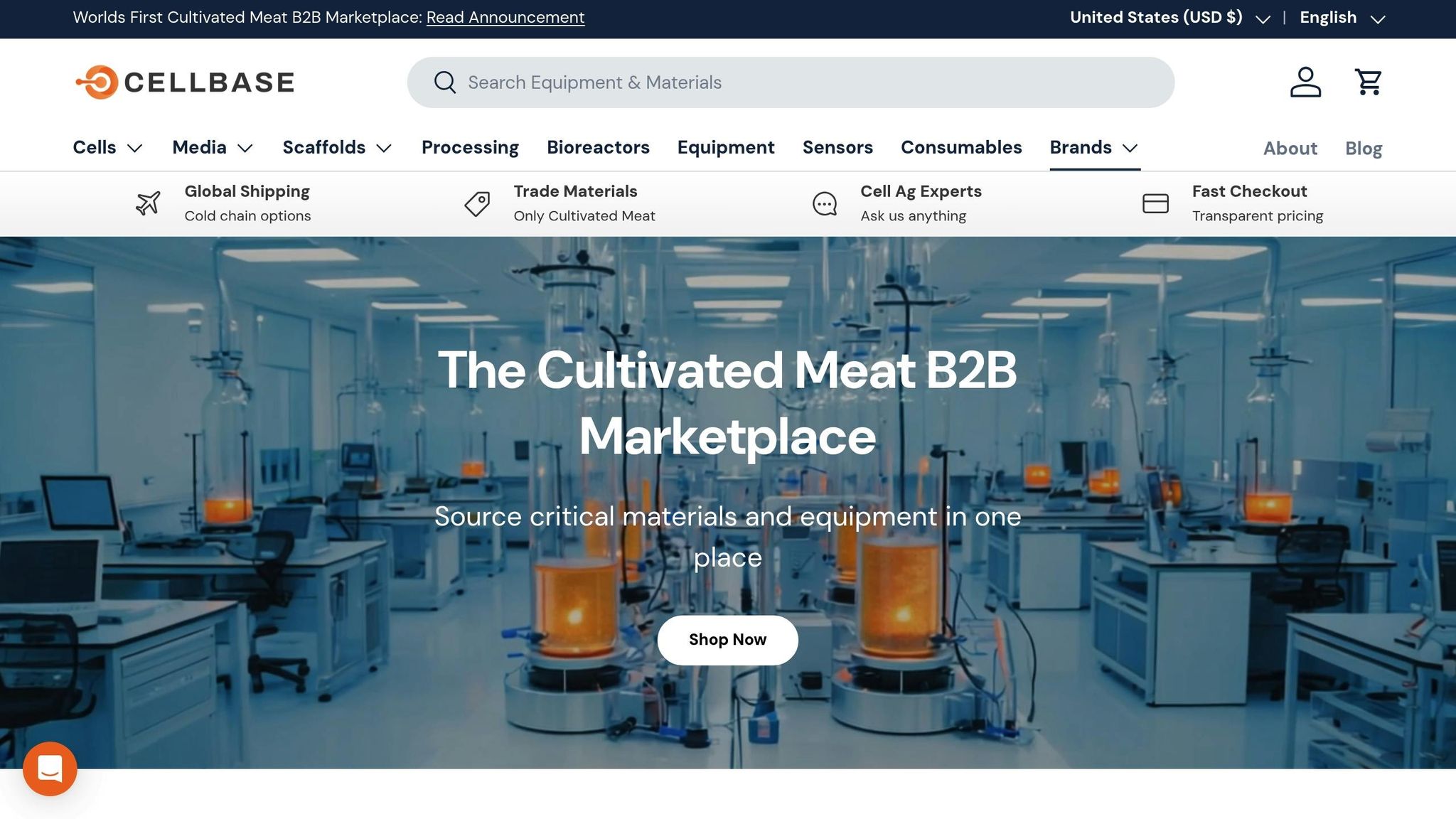
Cellbase is a game-changer in the procurement process, particularly for cultivated meat production. By narrowing down the vast selection of products found in general pharmaceutical catalogues, it consolidates fragmented supply chains to focus solely on materials suited for this specialised industry. The platform provides critical details such as application contexts, regulatory notes, and compatibility information, helping buyers determine whether materials meet food-grade and GMP standards [5].
Material Grade Selection, Contamination Control, and Testing
Selecting Material Grades Based on Risk
Choosing the right material grade is a crucial part of managing contamination risks while keeping production costs under control. This decision-making process is a key element of the GMP strategy mentioned earlier. As production scales up, it’s advisable to transition from research-grade materials to food-validated options that meet GMP standards. This avoids the unnecessary expense of pharmaceutical-grade materials, which are often over-specified for cultivated meat production [5]. To make informed choices, suppliers should provide detailed information about the material's application, regulatory compliance, and compatibility with cultivated meat processes [5].
Additionally, implementing a HACCP plan is essential. This plan should identify potential hazards - physical, biological, chemical, toxicological, and allergenic - throughout the production cycle. According to the Food Standards Agency, cultivated meat introduces unique risks, such as issues with cell line identity, microbiological contamination, and residual growth media. These challenges must be addressed carefully to ensure product safety [2].
Testing Requirements for Raw Materials
Testing raw materials involves addressing five key hazard categories: physical, biological, chemical, toxicological, and allergenic [2]. For cultivated meat, testing must go beyond the basics. Verifying the identity and consistency of cell lines is critical to prevent deviations that could affect product quality [2]. Microbiological testing is equally important, as maintaining sterile conditions and detecting hard-to-spot pathogens like mycoplasma or animal viruses is vital [4].
| Hazard Category | Specific Testing Focus for Cultivated Meat |
|---|---|
| Biological | Cell line identity, microbial contamination, viral safety, and toxins |
| Chemical | Residual growth media, growth factors, and process chemicals |
| Toxicological | Toxic compounds and anti-nutritional factors |
| Allergenic | Novel protein structures and unintended sequences from media interaction |
| Physical | Contaminants from equipment, scaffolds, or microcarriers |
Testing should align with GMP standards by setting critical limits, such as acceptable purity levels, microbial counts, and chemical residue thresholds. These limits should meet or exceed legal requirements [2]. Using tools like Process Analytical Technology (PAT) and automated sampling systems allows for real-time monitoring of nutrient levels, metabolites, pH, and temperature, ensuring better process control [5]. Validation testing must be completed before implementing safety plans, with regular reviews - at least annually or whenever there are changes to source materials or suppliers [2]. By 2026, the UK Food Standards Agency plans to release additional guidance on microbiology, toxicology, and growth media composition as part of its regulatory sandbox programme [3]. These measures collectively strengthen contamination control, as highlighted below.
Assessing Residues and Contaminants
Residual chemicals from the cultivation process must undergo rigorous testing to ensure they are non-toxic and safe for consumers [1]. Growth media components, growth factors, and process chemicals should be evaluated for toxicological safety, with acceptable limits clearly defined for the final product [2]. Unlike traditional meat, where the main risks are animal-derived contaminants, cultivated meat's hazards primarily come from production inputs.
Following HACCP protocols, these evaluations ensure safety throughout production. Effective contamination control also depends on maintaining strict environmental controls. Cleanrooms with advanced air handling, temperature regulation, and particulate management can significantly reduce risks [4]. Using single-use bioreactors, tubing, and filters further minimises cross-contamination between batches, although this approach may have environmental trade-offs [4]. A robust contamination strategy should also include continuous monitoring of air, surfaces, and water to detect microbial presence early [4].
In February 2025, the Food Standards Agency (FSA) and Food Standards Scotland (FSS) launched a regulatory sandbox programme, set to run until February 2027. This initiative involves industry leaders like Mosa Meat, BlueNalu, and Roslin Technologies. The goal is to gather technical insights into cultivated meat production, helping to shape guidelines on microbiology, toxicology, and growth media composition [3][2][6]. These thorough testing and residue assessment processes form the backbone of a robust risk management strategy across the production workflow.
sbb-itb-ffee270
Traceability and Change Control Systems
Creating Raw Material Master Files
Raw Material Master Files are the cornerstone of managing every ingredient and component used in cultivated meat production. These files should include clear specifications and Certificates of Analysis for all raw materials to confirm they meet established quality standards before entering GMP areas [8]. For biological materials like primary or immortalised cell lines, a Technical Report documenting their traceable history - such as cloning history for stable cell lines - is critical for supporting the Chemistry, Manufacturing, and Controls (CMC) section of regulatory filings [8].
Testing protocols, such as sterility tests, mycoplasma detection via PCR, and identity verification through karyotyping, must be documented. Additionally, ensure quarantine and formal release procedures are followed as per established guidelines [8]. Regulation (EC) 852/2004 highlights the importance of maintaining up-to-date documentation:
"Food business operators shall ensure that any documents describing the procedures developed in accordance with this Article are up to date at all times" [2].
Maintaining strict version control for all records is essential. This documentation underpins real-time tracking throughout the production process.
End-to-End Traceability Systems
Traceability and change control systems build on earlier steps like supplier and material verification. Regulation (EC) 178/2002 mandates full traceability from inputs to outputs [3]. For cultivated meat, this involves creating a detailed flow diagram that maps all inputs (e.g., culture media, growth factors, packaging) and outputs (e.g., waste, by-products) across the production process [2].
Real-time tracking of nutrient levels, metabolites, and cell health can be achieved using PAT (Process Analytical Technology) and automated sampling [5]. David Bell, Founder of Cultigen Group, emphasises:
"Scaling requires precise tools to track cell health and growth in real time" [5].
Advanced IoT sensors further enhance traceability by monitoring temperature and humidity during the transport of sensitive raw materials [5]. With batch failure rates currently averaging 11.2% and rising to 19.5% in larger-scale operations [5], robust traceability systems are indispensable for identifying contamination sources and minimising costly losses. Alongside traceability, controlled changes are crucial to maintaining product quality and consistency.
Change Control Procedures for Raw Materials
Effective change control is a critical extension of raw material traceability, ensuring that any modifications in production are managed systematically. Changes to source materials, equipment, or production steps must trigger an immediate review of the HACCP plan, as required by Regulation (EC) 852/2004:
"When any modification is made in the product, process, or any step, food business operators shall review the [HACCP] procedure and make the necessary changes to it" [2].
Such changes can introduce new risks, such as microbial contamination or altered cell behaviour [2][9]. In cultivated meat production, genetic drift and mutations in cell lines present significant challenges. Studies indicate that accumulated mutations can impair cell function and compromise product quality [9].
To address these risks, regular genetic monitoring - using techniques like whole-genome sequencing or RNA sequencing - is essential. Formal change control procedures should include impact assessments that evaluate safety, nutritional quality, and allergenicity profiles [2][9]. When necessary, comparability studies must be conducted, with all modifications documented and reviewed thoroughly [2].
Transitioning from R&D to GMP Procurement
Phase-Based Qualification Approach
Moving from R&D to commercial production involves distinct phases, each with evolving procurement priorities and regulatory demands.
During the R&D and early pilot phase, production typically involves small volumes (e.g., 1–5 litre bioreactors). At this stage, the focus is on proving concepts and identifying potential hazards. Suppliers don’t necessarily need full food-grade certifications yet, but it’s a good time to start identifying those familiar with scaling up and meeting food production requirements [5].
As companies progress to the scale-up and pilot phase, procurement becomes more demanding. Validated food-grade suppliers are essential, along with specialised sensors and pilot-scale bioreactors. This is also when HACCP implementation begins, supplier qualification processes are formalised, and safety dossiers are prepared [2]. Supplier reliability becomes increasingly critical as production scales up.
The final leap to commercial production often involves large-scale operations, such as 50,000-litre bioreactors and bulk media orders. At this stage, full GMP compliance is non-negotiable. This includes adhering to POAO hygiene rules and establishing robust end-to-end traceability [2]. With the cultivated meat market projected to grow significantly by 2025 [5], the importance of getting procurement right cannot be overstated.
This phased approach ensures procurement strategies evolve to meet the demands of full GMP compliance.
Aligning Procurement with GMP Standards
Procurement strategies must adapt as production scales and regulatory requirements become stricter.
While research-grade materials work for early discovery phases, they’re unsuitable for commercial production. Procurement teams must transition to food-grade inputs as operations scale. David Bell, Founder of Cultigen Group, highlights this shift:
"When you're building cell culture workflows for food production instead of drug development, the requirements shift. Food-grade certifications. Cost structures optimised for commercial production, not research budgets." [5]
Ensuring all chemicals are food-grade and safe for consumption is critical [1]. This involves screening for non-food grade chemicals, biological contaminants, and residues from growth media that could remain in the final product [1]. Equipment also needs to meet commercial demands - bioreactors, for example, must operate continuously for months, which often exceeds the capacity of systems designed for research [5].
Establishing approved vendor lists early in the scale-up phase can prevent last-minute issues during commercialisation. Purchase specifications should reference food-grade certifications and include Certificates of Analysis, sterility testing, and mycoplasma detection. Regulation (EC) 852/2004 requires HACCP procedures to be reviewed whenever source materials or production processes are modified [2], making procurement decisions integral to regulatory compliance.
The UK Food Standards Agency’s regulatory sandbox programme, running from February 2025 to February 2027, offers valuable support for companies navigating these transitions [3].
How Cellbase Supports Procurement Scaling
Platforms like Cellbase address the challenges of scaling procurement for commercial production, offering a streamlined approach to material sourcing while ensuring compliance and scalability.
General lab supply catalogues can include up to 300,000 products, but the majority - up to 299,950 - may not be relevant to cultivated meat production [5]. Cellbase eliminates this inefficiency by functioning as a specialised vertical marketplace dedicated exclusively to the cultivated meat industry. Each listing includes critical information such as regulatory notes, application context, and compatibility, helping teams identify materials that meet food-grade standards rather than just research-grade criteria [5]. The platform centralises procurement across eight key categories: cells, media, bioreactors, scaffolds, equipment, sensors, processing, and consumables.
Additionally, Cellbase connects procurement teams with specialised suppliers like Multus Bio, BioBetter, and Gelatex - companies now offering cultivated meat-specific products at a commercial scale, a market that didn’t exist five years ago [5]. Clear lead times and accessible supplier information simplify supplier engagement. For teams working towards GMP compliance, this consolidated approach ensures access to suppliers who understand the need for continuous equipment operation and materials that meet strict food safety standards.
Conclusion
Challenges and Solutions Overview
Ensuring raw materials for GMP-compliant cultivated meat meet the necessary standards is no small feat. The supply chains are fragmented, often dominated by pharmaceutical suppliers who lack experience with food-grade requirements. On top of that, contamination risks loom large at every stage of production, adding another layer of complexity [5].
To tackle these hurdles, strategies like early implementation of HACCP principles [2], standardised cell bank qualification processes [8], and transitioning to more affordable food-grade inputs are being adopted [5]. Success hinges on thorough supplier qualification, strict testing procedures, and establishing traceability systems that cover the entire supply chain. Companies also need to adapt their procurement strategies to stay in sync with evolving regulatory frameworks, especially as the UK Food Standards Agency continues to refine its guidance through its regulatory sandbox programme [3].
Future Developments in Raw Material Qualification
Looking ahead, the industry is gearing up for major advancements in both technology and regulations. A notable trend is the move towards serum-free media and ingredients derived without the use of animals, which not only addresses ethical concerns but also reduces the risk of zoonotic diseases [4]. Meanwhile, Artificial Intelligence and Machine Learning are starting to play a pivotal role in real-time monitoring of microbial safety and metabolite profiles during production. These tools promise to enhance contamination control with greater precision [4].
The commercial stakes are high. With the cultivated meat market projected to grow substantially in the coming years, establishing solid raw material qualification frameworks is not just a regulatory necessity - it’s a business imperative [5].
How Cellbase Simplifies Procurement and Qualification
Cellbase offers a practical solution to these challenges through its specialised vertical marketplace designed exclusively for the cultivated meat sector. The platform organises suppliers into eight key categories: cells, media, bioreactors, scaffolds, equipment, sensors, processing, and consumables. Each listing provides detailed information on applications, regulatory considerations, and compatibility, helping teams pinpoint materials that meet food-grade standards rather than just research-grade criteria.
In addition, Cellbase connects procurement teams with suppliers like Multus Bio, BioBetter, and Gelatex, who are now delivering cultivated meat-specific products at a commercial scale. This streamlined approach provides companies with access to partners committed to maintaining high performance and rigorous food safety standards, ensuring a smoother transition from R&D to full-scale commercial operations.
FAQs
What are the key challenges in aligning food GMP with biopharma GMP for cultivated meat production?
Aligning food-grade GMP with the more stringent biopharma GMP presents a unique set of challenges for cultivated meat producers.
Food GMP primarily emphasises hazard analysis and risk-based controls to ensure ingredients are safe for consumption. In contrast, biopharma GMP focuses on sterility, rigorous validation, and meticulous batch records. For cultivated meat facilities, this means adopting pharmaceutical-grade validation processes while still adhering to food-specific microbial limits. The result? A demanding and expensive dual-quality system that blends the requirements of two very different industries.
Another major challenge lies in raw material qualification. Many essential inputs - such as growth media, scaffolds, and cell lines - are traditionally developed for food applications. These materials often fail to meet the stricter purity and traceability standards required in pharmaceutical manufacturing. Suppliers are tasked with proving that their materials comply with both food-grade microbial specifications and the impurity limits expected in biopharma. This dual compliance can lead to higher costs and delays in procurement.
Regulatory oversight in the United States adds yet another layer of complexity. The FDA and USDA share jurisdiction, meaning companies must work within two separate regulatory frameworks. This requires harmonised documentation and streamlined processes to satisfy both agencies. Drawing on biopharma expertise, such as using pharma-grade media manufacturing, can ease some of these difficulties. However, the fundamental differences between food GMP and biopharma GMP remain a significant barrier for the cultivated meat industry.
What is the UK regulatory sandbox programme, and how does it support the cultivated meat industry?
The UK has introduced a regulatory sandbox for cultivated meat - a two-year initiative backed by government funding. Its goal? To assist companies in developing safe, compliant processes in partnership with the Food Standards Agency (FSA) and Food Standards Scotland (FSS). This structured programme provides a controlled environment for testing and refining processes, ensuring they meet regulatory standards.
One of the key benefits of the sandbox is access to scientific and regulatory expertise. This support helps companies collect reliable safety data and align their operations with UK food safety regulations. Additionally, it speeds up the creation of GMP-compliant raw material qualification processes and risk-based assessments. By bringing together regulators, academics, and industry professionals, the sandbox creates opportunities for testing new ingredients while receiving early feedback on compliance.
The ultimate aim? To minimise risks for cultivated meat developers, simplify regulatory approval, and help the industry transition from pilot projects to large-scale commercial production.
Why is it necessary to switch from pharmaceutical-grade to food-grade materials in cultivated meat production?
Switching to food-grade materials is essential since cultivated meat is meant for consumption and must adhere to strict food safety regulations and hygiene standards. These standards prioritise addressing food-related risks to protect consumers, rather than following pharmaceutical-grade requirements.
By using food-grade materials, producers can simplify manufacturing, cut down expenses, and ensure that cultivated meat meets the expectations of both regulatory bodies and consumers.


